

The OBR State Pension age change refers to the financial effect of the legislated increase from age 66 to 67 between April 2026 and spring 2028.
The OBR has not predicted a specific number of people who will enter poverty. Its analysis estimates how much the Government could save through lower State Pension expenditure, higher tax receipts and increased spending on working-age benefits.
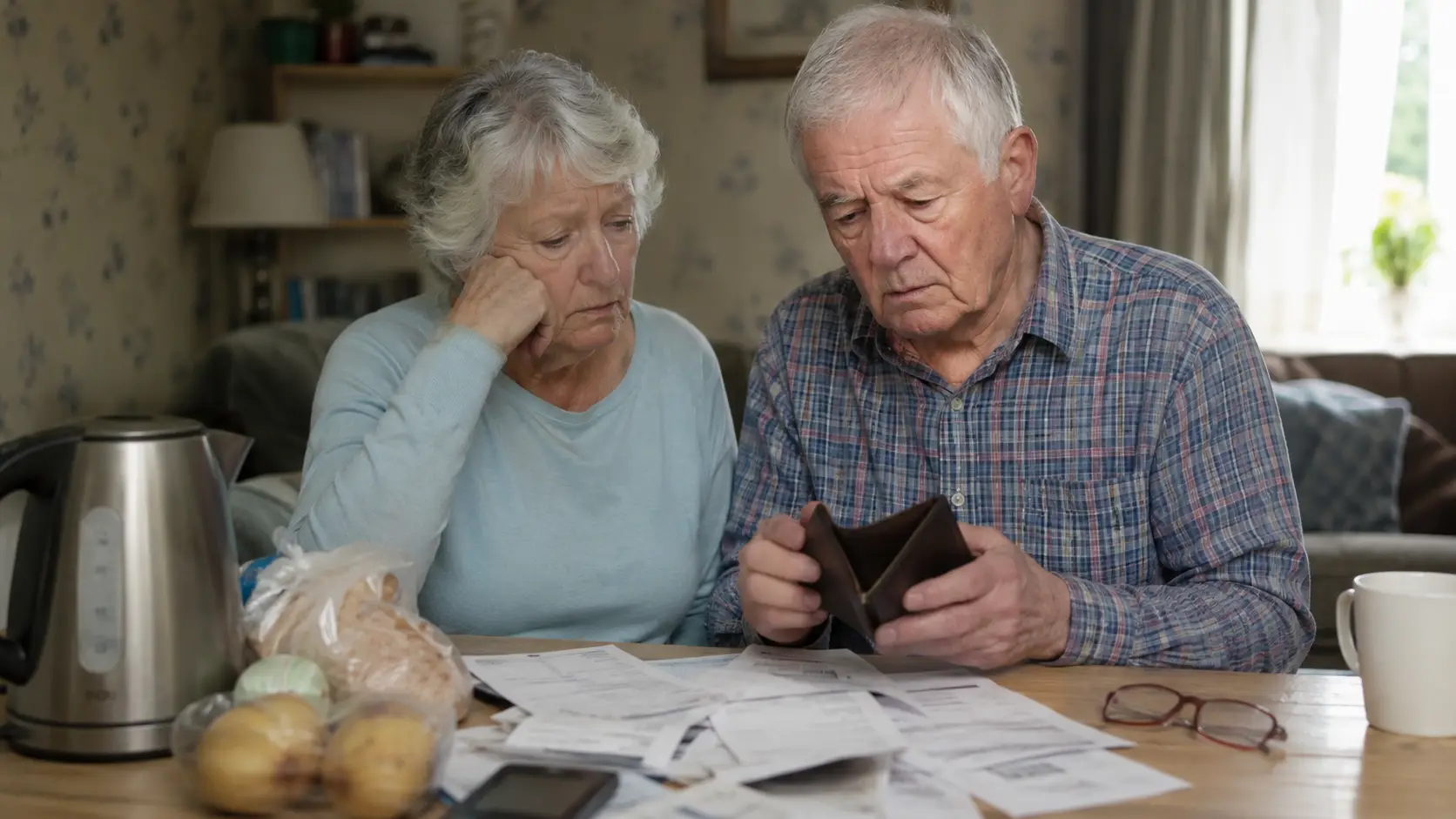
The poverty warning comes principally from the Work and Pensions Committee. It found that the previous rise in State Pension age caused the poverty rate among affected 65-year-olds to rise from 10% to 24%.
MPs are concerned that the present increase could have a greater effect because those affected are one year older and may be less able to continue working.
OBR State Pension Age Change at a Glance:
| Key point | Confirmed position |
| State Pension age before the change | 66 |
| New State Pension age | 67 |
| Phasing period | April 2026 to spring 2028 |
| People directly affected by the phased transition | Mainly those born between 6 April 1960 and 5 March 1961 |
| OBR net fiscal saving in 2029–30 | Estimated at £10.5 billion |
| Fewer 66-year-olds receiving State Pension in 2029–30 | Estimated at 820,000 |
| Additional Universal Credit spending | Estimated at £0.7 billion |
| Potential additional tax receipts | Around £0.9 billion |
| People not in paid work in the year before pension age | 57% |
| Full new State Pension rate for 2026–27 | £241.30 a week, subject to National Insurance record |
| Universal Credit standard allowance for a single claimant aged 25 or over | £424.90 a month for 2026–27 |
| Pension Credit standard minimum guarantee for a single claimant | £238 a week for 2026–27 |
What Is Changing to the UK State Pension Age?

The State Pension age began increasing gradually from 66 in April 2026. People born during the transition period will reach State Pension age at different points between their 66th and 67th birthdays.
Under the current legislated timetable:
- Someone born between 6 April and 5 May 1960 reaches State Pension age at 66 years and one month.
- Someone born between 6 September and 5 October 1960 reaches it at 66 years and six months.
- Someone born between 6 February and 5 March 1961 reaches it at 66 years and 11 months.
- People born from 6 March 1961 generally have a State Pension age of 67, subject to future legislation.
For example, a person born on 31 July 1960 is treated as reaching State Pension age at 66 years and four months on 30 November 2026. A person born on 31 January 1961 reaches it at 66 years and ten months on 30 November 2027.
People should use the official GOV.UK State Pension age checker rather than assuming that eligibility begins on their 66th or 67th birthday. The checker also provides an indication of Pension Credit qualifying age.
Who Approved the Rise to 67?
The increase was not introduced by the OBR.
It was legislated through the Pensions Act 2014, which brought the rise to 67 forward by eight years. The Government subsequently confirmed in March 2023 that the increase would proceed between 2026 and 2028.
The OBR’s role is to produce independent economic and fiscal forecasts. Its calculations describe the likely effect of the existing policy on borrowing, welfare spending, employment and tax receipts.
How Much Could the Pension Age Rise Save the Government?
The OBR estimates that raising the State Pension age to 67 will reduce government borrowing by a net £10.5 billion in 2029–30, compared with a scenario in which the age remained at 66.
The largest saving comes from delaying access to pensioner benefits:
- £10.2 billion from an estimated 820,000 fewer 66-year-olds receiving the State Pension;
- £0.2 billion from around 40,000 fewer people receiving Pension Credit and Winter Fuel Payment;
- approximately £0.9 billion in additional tax receipts if more people remain in or enter employment.
Those savings are partly offset by an estimated £0.7 billion increase in Universal Credit spending, because some 66-year-olds will remain within the working-age benefit system for longer.
These are forecasts rather than guaranteed outcomes. The OBR says the calculations remain uncertain because employment responses, benefit claims, earnings and disability-related support could differ from its central assumptions.
Why Could the State Pension Age Change Increase Poverty?
The financial risk arises when someone cannot continue working but does not yet qualify for pension-age support.
A healthy person with secure employment may be able to work for several additional months and continue building pension savings.
Someone who has left a physically demanding job because of illness may instead face an extended period on Universal Credit, use private pension money earlier than planned or spend savings intended for retirement.
The Work and Pensions Committee reported that 57% of people are no longer in paid work during the year before State Pension age. In 2025, only 42% of people aged 65 were working, falling to 29.3% by age 66.
The reasons for leaving employment are also uneven. Wealthier people are more likely to retire by choice, supported by property, savings or private pensions. Lower-income workers are more likely to leave because of:
- Disability or a work-limiting health condition;
- Unpaid caring responsibilities;
- Insecure or physically demanding employment;
- Redundancy and difficulty finding another job at an older age;
- Limited access to workplace or private pension savings.
The committee found that the proportion of people aged 60 to 64 reporting a work-limiting health condition had risen from 28% to 31%. It also highlighted substantial geographical inequalities in healthy life expectancy.
In England, healthy life expectancy was reported at around 70 years in Richmond upon Thames, compared with approximately 51 years in Blackpool and Hartlepool.
People living in areas with poorer health outcomes may therefore receive the State Pension for fewer years while facing greater difficulty working until the qualifying age.
What Happened When the Pension Age Previously Rose?

When the State Pension age increased from 65 to 66, the income poverty rate among 65-year-olds more than doubled from 10% to 24%. The committee said this placed approximately 100,000 people below the poverty line.
Employment also increased. A DWP evaluation cited by the OBR estimated that the earlier change resulted in an additional 55,000 people aged 65 being employed, with average earnings across the age group rising by £52 a week.
This illustrates the distributional problem. Some people benefit from earning for longer, while others who cannot work may experience a substantial loss of income.
How Does Universal Credit Compare With Pension-Age Support?
A single Universal Credit claimant aged 25 or over receives a standard allowance of £424.90 a month in 2026–27, before any additions or deductions.
By comparison, Pension Credit can top up the weekly income of an eligible single pensioner to £238, equivalent to roughly £1,031 over an average month.
The full new State Pension is £241.30 a week, although the actual State Pension depends on the person’s National Insurance record.
Universal Credit claimants may receive additional amounts for housing, children, caring or limited capability for work and work-related activity.
However, entitlement is means-tested and individual awards can be affected by earnings, savings, deductions and household circumstances.
Pension Credit qualifying age is linked directly to State Pension age. As State Pension age rises, people must also wait longer before becoming eligible for Pension Credit.
Could 66-Year-Olds Receive More Universal Credit?

The Work and Pensions Committee has recommended that the Government consult on increasing Universal Credit in the year immediately before State Pension age.
It suggested introducing additional support by the end of 2026 and examining how work-related conditionality should apply to older claimants.
The committee estimated that an uplift for 66-year-olds could cost about £600 million, a relatively small proportion of the OBR’s estimated £10.5 billion fiscal saving.
For longer-term reform, MPs suggested considering:
- increased Universal Credit for up to three years for people unable to work because of disability, poor health or caring responsibilities; or
- gradually increasing the Universal Credit standard allowance from age 60 until it reaches the Pension Credit guarantee level at State Pension age.
These are committee recommendations, not confirmed benefit changes. No claimant should assume that a new pre-pension payment or Universal Credit uplift will be introduced unless the Government changes the rules formally.
What Should People Approaching State Pension Age Check?

People nearing retirement may find it helpful to:
- confirm their exact State Pension age using the GOV.UK calculator;
- obtain a State Pension forecast and review their National Insurance record;
- check whether missing qualifying years can be filled;
- review workplace and personal pension statements;
- check possible entitlement to Universal Credit or health-related benefits;
- avoid withdrawing an entire private pension without understanding the tax and long-term income consequences;
- seek regulated financial advice or free guidance from MoneyHelper where necessary.
The committee reported that 83% of the 810,000 people who accessed pension savings in 2024–25 did so before State Pension age. It warned that people with smaller pension pots may make unsustainable withdrawals when trying to bridge an income gap.
Final Takeaway
The OBR State Pension age change highlights a fundamental tension between fiscal sustainability and retirement inequality.
Raising the State Pension age to 67 is expected to reduce government borrowing by billions of pounds and encourage some people to remain in employment.
However, the savings are partly achieved by delaying State Pension and pension-age benefit payments to hundreds of thousands of 66-year-olds.
For people with secure jobs, good health and private savings, the transition may be manageable.
For those who have already left employment because of disability, caring responsibilities or physically demanding work, it could mean spending longer on working-age benefits and using retirement savings prematurely.
The Work and Pensions Committee has therefore called for targeted support, including consideration of a Universal Credit uplift before State Pension age.
That recommendation has not yet become government policy, so people approaching retirement should rely on current GOV.UK eligibility rules and check their individual State Pension date.
Frequently Asked Questions
When is the UK State Pension age changing to 67?
The phased increase began in April 2026. Under the current timetable, State Pension age will reach 67 for those born from 6 March 1961, with the transition completed in spring 2028.
Who is affected by the rise from 66 to 67?
The phased transition mainly affects people born from 6 April 1960 onwards. Those born between 6 April 1960 and 5 March 1961 have a State Pension age between 66 years and one month and 66 years and 11 months.
How much will the pension age rise save?
The OBR estimates a net reduction in government borrowing of £10.5 billion in 2029–30 compared with keeping State Pension age at 66. This is a forecast and remains subject to economic and behavioural uncertainty.
Why could poverty rise among 66-year-olds?
Many people have already left employment before reaching State Pension age. Those without sufficient earnings, savings or private pensions may have to rely on lower working-age benefits for longer.
Can a person receive Pension Credit at 66?
It depends on that person’s exact Pension Credit qualifying age, which follows the State Pension age timetable. During the transition, some 66-year-olds must wait several additional months before qualifying.
Is the Government introducing a special benefit for older people?
No new pre-pension benefit has been confirmed. The Work and Pensions Committee has recommended consulting on a Universal Credit uplift for people in the year before State Pension age.
Will State Pension age rise to 68?
Current legislation schedules a rise from 67 to 68 between 2044 and 2046. The third State Pension age review is examining future arrangements, but any change to the legislated timetable would require government proposals and parliamentary approval.
Can someone keep working after reaching State Pension age?
Yes. There is no general default retirement age, and a person can continue working after reaching State Pension age. Employment earnings and pension income may have tax implications.
Note: This article has been reviewed against official Office for Budget Responsibility, Department for Work and Pensions and UK Parliament guidance.