

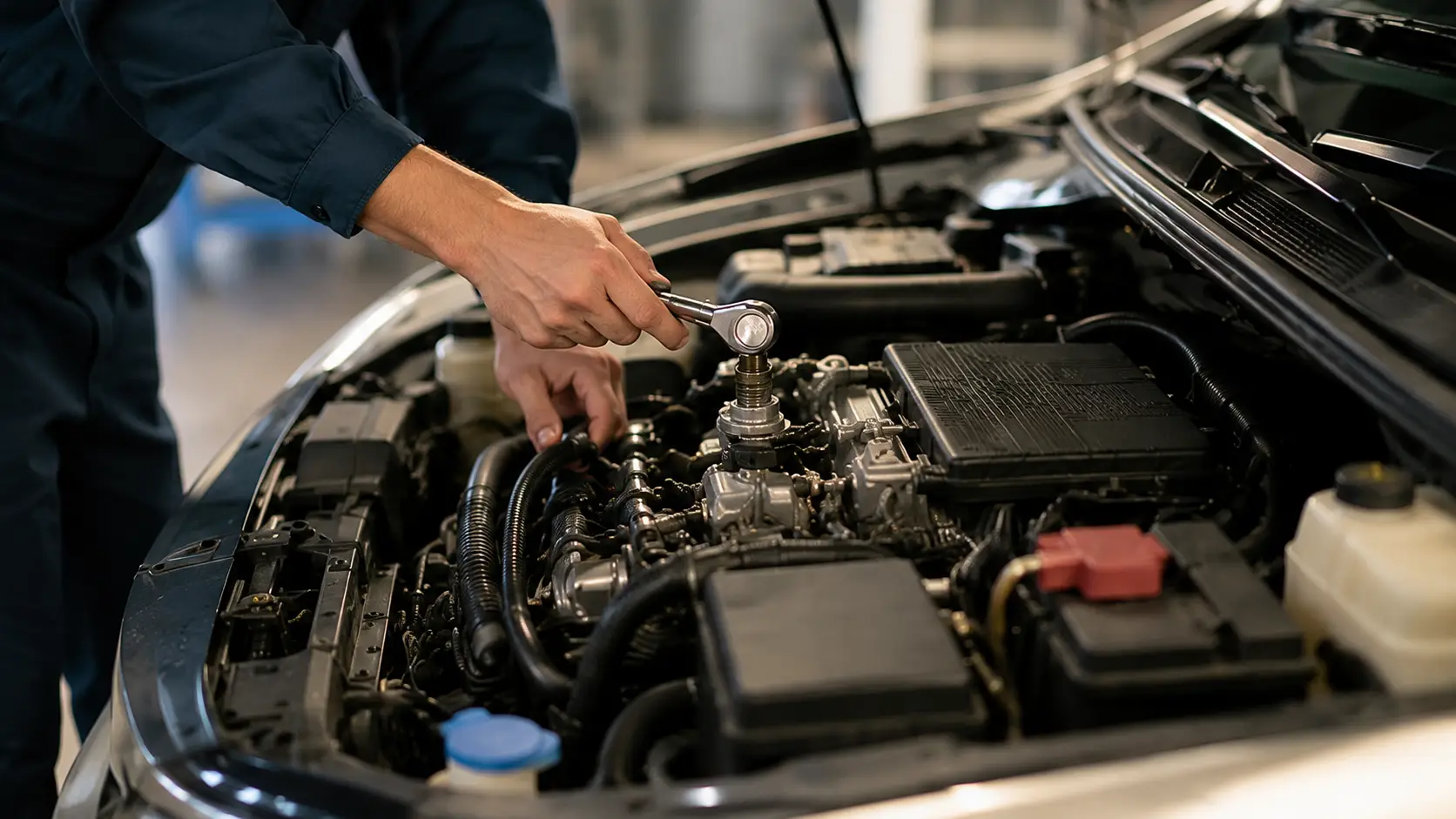
For the UK driving theory-test question “what part of the car does the law require you to keep in good condition?”, the expected answer is seat belts.
The Road Vehicles (Construction and Use) Regulations 1986 specifically contain requirements covering the maintenance of seat belts and their anchorage points.
However, this does not mean seat belts are the only part of a vehicle that must be maintained.
Drivers have a wider legal responsibility to ensure their entire vehicle remains safe, legal and roadworthy. This includes tyres, brakes, steering, lights, mirrors, windscreens, number plates and exhaust systems.
Why Are Seat Belts the Correct Theory-Test Answer?
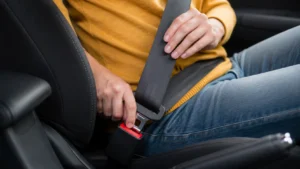
Seat belts are the answer drivers should remember when this particular question appears in theory-test preparation.
The Road Vehicles (Construction and Use) Regulations 1986 include Regulation 48, which specifically deals with the maintenance of seat belts and anchorage points.
This means a legally required seat belt should not simply be fitted. It must remain usable and properly maintained.
During an MOT, mandatory seat belts can be checked for their condition, operation, security and suitability.
Problems may include:
- Damaged Or Frayed Webbing
- A Buckle That Does Not Fasten Correctly
- A Belt That Does Not Retract Properly
- Insecure Anchorage Points
- Missing Required Seat Belts
So, if the question is asking what part of the car does the law require you to keep in good condition, remember seat belts. The broader rules, however, go considerably further.
What Does UK Law Require Drivers to Maintain?
The Highway Code states that drivers must ensure their vehicles comply with the Road Vehicles (Construction and Use) Regulations and the Road Vehicles Lighting Regulations.
Rule 97 also states that a vehicle must be legal and roadworthy before setting off.
The Road Traffic Act 1988 provides the wider legal framework covering vehicles used in an unroadworthy or dangerous condition. It specifically refers to areas such as brakes, steering, tyres, vehicle equipment, parts and lighting.
The Road Vehicles Lighting Regulations 1989 separately contain requirements concerning the condition and use of required lamps and reflectors.
Main Vehicle Components And Their Requirements
| Car Part | Main Requirement | Common Problem | Possible Result |
| Seat Belts | Secure and working | Frayed belt or faulty buckle | MOT failure or safety issue |
| Tyres | Legal tread and safe condition | Low tread, cuts or bulges | MOT failure or enforcement |
| Brakes | Effective and safe | Poor braking or defects | MOT failure or dangerous condition |
| Lights | Working and correctly adjusted | Failed bulb or poor aim | MOT failure |
| Windscreen | Clear driver view | Cracks, chips or obstruction | MOT issue depending on severity |
| Mirrors | Required mirrors usable | Missing or damaged obligatory mirror | MOT failure |
| Number Plates | Correct and legible | Obscured or incorrectly displayed plate | MOT failure or fine |
| Exhaust | Secure and compliant | Leak, excessive noise or emissions | MOT failure |
| Steering | Safe and responsive | Excessive play or damaged components | MOT failure or dangerous condition |
Which Parts of a Car Should Be Kept Roadworthy?
1. Seat Belts
Seat belts should fasten securely, release correctly and remain free from serious damage.
Drivers should pay attention to damaged webbing, defective buckles and loose mounting points. A fault should be investigated rather than left until the next MOT.
2. Tyres
For cars, light vans and light trailers, the legal minimum tyre tread depth is 1.6mm across the central three-quarters of the tread and around the entire circumference.
Tyres should also be properly inflated and checked for:
- Cuts
- Bulges
- Exposed Cords
- Serious Cracking
- Uneven Wear
- Incorrect Pressure
Tyre condition can directly affect braking, steering and grip.
3. Brakes And Steering
Brakes and steering are specifically important when assessing whether a vehicle is roadworthy.
Warning signs such as reduced braking performance, pulling under braking, unusual noises, excessive steering play or unexplained vibration should not be ignored.
A driver should arrange an inspection if there is any reason to believe these systems are defective.
4. Headlights And Other Lights
Required headlights, brake lights, indicators, rear lights and other mandatory lamps must work correctly.
The Highway Code also requires lights, indicators and reflectors to be kept clean and clear. Lights must be properly adjusted so that they do not dazzle other road users.
The Road Vehicles Lighting Regulations additionally require relevant lamps and reflectors to remain in good working order.
5. Windscreen, Wipers And Washers
The driver must have an adequate view of the road.
Windscreens and windows should therefore remain clean and free from obstructions. Wipers and washers should also be capable of clearing the area needed for safe visibility.
DVSA defines Zone A of the windscreen as a 290mm-wide section centred on the steering wheel within the swept area.
MOT inspectors consider:
- Damage Over 10mm In Zone A
- Damage Over 40mm Elsewhere In The Swept Area
- Damage Affecting The Driver’s View
- Serious Tinting Or Discolouration
Importantly, the current MOT manual states that failure for windscreen damage is justified where the damage significantly affects the driver’s view.
6. Mirrors
Mirrors should give the driver the required view behind and around the vehicle.
Whether a missing or damaged mirror results in an MOT failure depends on whether that particular mirror is obligatory for the vehicle. Requirements can vary according to the vehicle type and when it was first used.
For many modern passenger cars, several mirror positions are required, although an internal mirror may not be required where it cannot provide a view to the rear.
Drivers should therefore avoid assuming that one broken mirror is always acceptable or always automatically illegal.
7. Number Plates
Number plates must correctly display the vehicle registration and remain readable.
They should not be excessively damaged, obscured or altered in a way that affects the appearance or legibility of the characters.
Driving with incorrectly displayed number plates can result in a fine of up to £1,000, and the vehicle can fail its MOT.
Drivers should regularly remove mud, snow and dirt that could prevent the registration from being clearly seen.
8. Exhaust And Emissions
The exhaust system is another important area missing from many simplified explanations of vehicle roadworthiness.
DVSA checks the exhaust system for problems including major leaks, insecurity and dangerous fumes entering the passenger compartment. Exhaust emissions are also tested where applicable.
Potential problems include:
- Excessive Exhaust Smoke
- Major Exhaust Leaks
- Excessive Noise
- Missing Or Defective Emissions Equipment
- Insecure Exhaust Components
- Exhaust Fumes Entering The Cabin
The Highway Code also states that exhaust emissions must not exceed prescribed levels.
What Happens If Your Car Is Not Roadworthy?
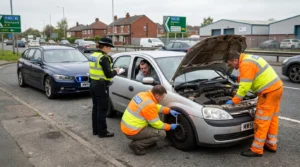
Driving an unsafe vehicle can lead to consequences considerably more serious than simply failing an MOT.
GOV.UK states that driving a vehicle in a dangerous condition can result in:
- A Fine Of Up To £2,500 For Most Vehicles
- Three Penalty Points
- A Possible Driving Disqualification
The Highway Code penalty table also lists a maximum £1,000 fine for having no valid MOT certificate.
A current MOT certificate is therefore not a defence if the vehicle has subsequently developed a dangerous defect.
Can You Drive After An MOT Failure?
Sometimes, but not always.
A vehicle that has failed its MOT may be driven away if its existing MOT certificate is still valid and no dangerous defects were recorded.
The vehicle must still meet minimum roadworthiness standards.
If the MOT failure includes a dangerous problem, the vehicle normally needs repairing before it is driven.
GOV.UK states that driving a vehicle that failed because of a dangerous defect can lead to a fine of up to £2,500, three penalty points and a possible driving ban.
Does A Valid MOT Mean Your Car Is Roadworthy All Year?
No.
An MOT confirms that specified components met the required standards when the vehicle was tested. It does not guarantee the condition of the vehicle for the following 12 months.
GOV.UK specifically states that a vehicle can be unsafe even when it has a current MOT certificate.
This distinction is particularly important for businesses using cars or vans for work. Regular inspections and maintenance help reduce the risk of vehicle downtime, enforcement action and preventable safety problems.
Can Poor Vehicle Condition Affect Car Insurance?
Potentially, but it is inaccurate to say that every vehicle defect automatically invalidates insurance.
Many motor insurance policies contain conditions requiring the vehicle to remain roadworthy. If an accident occurs and the insurer believes a defect contributed to the loss, the condition of the vehicle may become relevant to the claim.
The Financial Ombudsman Service says that where a claim is affected because a vehicle was allegedly unroadworthy, it considers evidence about whether the loss or damage was caused by that condition.
Drivers should therefore:
- Read Their Policy Conditions
- Keep The Vehicle Properly Maintained
- Act On Serious MOT Advisories
- Keep Service And Repair Records
- Replace Unsafe Components Promptly
The effect on a particular insurance claim will depend on the policy wording and circumstances.
Practical Vehicle Maintenance Checklist
Vehicle maintenance should not be treated as something done only immediately before an MOT.
Before Driving
Check:
- Windscreen And Windows Are Clear
- Mirrors Give A Clear View
- Lights Are Working
- Brakes Feel Normal
- Number Plates Are Visible
- No Obvious Tyre Damage Is Present
Weekly Or Regular Checks
Check:
- Tyre Pressure
- Tyre Tread And Condition
- Windscreen Washer Fluid
- Exterior Lights
- Wiper Blades
- Warning Lights
Monthly Checks
Consider checking:
- Engine Oil
- Coolant
- Brake Fluid
- Battery Condition
- Tyres For Uneven Wear
- Seat Belts And Buckles
The manufacturer’s handbook should be followed for the correct inspection intervals and specifications for the particular vehicle.
Annual And Scheduled Maintenance
Drivers should:
- Arrange The Required MOT
- Follow Manufacturer Service Intervals
- Repair Safety-Critical Faults Promptly
- Investigate Warning Lights
- Keep Maintenance Records
Common Vehicle Roadworthiness Myths
| Myth | Reality |
| Seat belts are the only part the law requires you to maintain | Seat belts are the theory-test answer, but the whole vehicle must remain roadworthy |
| A valid MOT means the car is legal for 12 months | A vehicle can become unsafe after passing its MOT |
| Any cracked windscreen automatically fails an MOT | Position, size and effect on the driver’s view are important |
| One broken mirror is always illegal | It depends on which mirrors are legally required for that vehicle |
| Small tyre defects can wait until the next service | Dangerous or illegal tyre defects should be dealt with immediately |
| An MOT failure always means the car cannot be driven | Some failed vehicles can be driven if an existing MOT remains valid and there are no dangerous defects |
| A vehicle defect automatically cancels insurance | The effect depends on the policy, defect and circumstances of the claim |
What Should You Remember For The Theory Test?
The easiest way to remember this topic is to separate the theory-test question from the driver’s wider legal responsibility.
Theory-test answer: Seat belts.
Real-world responsibility: Keep the entire vehicle legal, safe and roadworthy.
So when asked “what part of the car does the law require you to keep in good condition?”, choose seat belts if that is one of the answer options.
Outside the test, however, drivers remain responsible for tyres, brakes, steering, lights, mirrors, windscreens, number plates, exhaust systems and other safety-critical equipment.
Conclusion
For the familiar question “what part of the car does the law require you to keep in good condition?”, the answer to remember is seat belts.
The Road Vehicles (Construction and Use) Regulations specifically cover their maintenance, which explains why this answer appears in UK theory-test material.
In everyday driving, the responsibility is much broader. A vehicle must remain safe and roadworthy whenever it is used.
Regular checks of tyres, brakes, steering, lights, visibility, mirrors, number plates, seat belts and exhaust systems can help drivers identify problems before they become dangerous or result in enforcement action.
Frequently Asked Questions
What Part Of The Car Does The Law Require You To Keep In Good Condition?
The expected UK theory-test answer is seat belts. However, wider roadworthiness laws require the whole vehicle to remain safe and legal.
Can I Drive With A Cracked Windscreen?
It depends on the size and location of the damage and whether it significantly affects the driver’s view. Damage in the critical swept area can result in an MOT failure.
Are Broken Car Mirrors Illegal?
Not every damaged mirror automatically makes a car illegal. The important question is whether the vehicle still has the obligatory mirrors required for its age and type.
Can I Drive After Failing An MOT?
Possibly. Your existing MOT must still be valid, the vehicle must remain roadworthy and the failure must not include a dangerous defect.
What Is The Legal Minimum Tyre Tread Depth?
For most cars, light vans and light trailers, the minimum is 1.6mm across the central three-quarters of the tread and around the entire circumference.
Does An MOT Mean My Car Is Roadworthy?
Only at the point of testing for the items assessed. A vehicle can later develop faults, and the driver remains responsible for keeping it roadworthy.
Can An Unroadworthy Car Affect An Insurance Claim?
It can. Insurers may investigate whether an unroadworthy condition breached the policy or contributed to the incident. The effect depends on the individual circumstances and policy wording.
Can An Illegal Number Plate Fail An MOT?
Yes. A number plate that is incorrectly displayed, excessively damaged, obscured or otherwise non-compliant can lead to an MOT failure and may also result in a fine.