

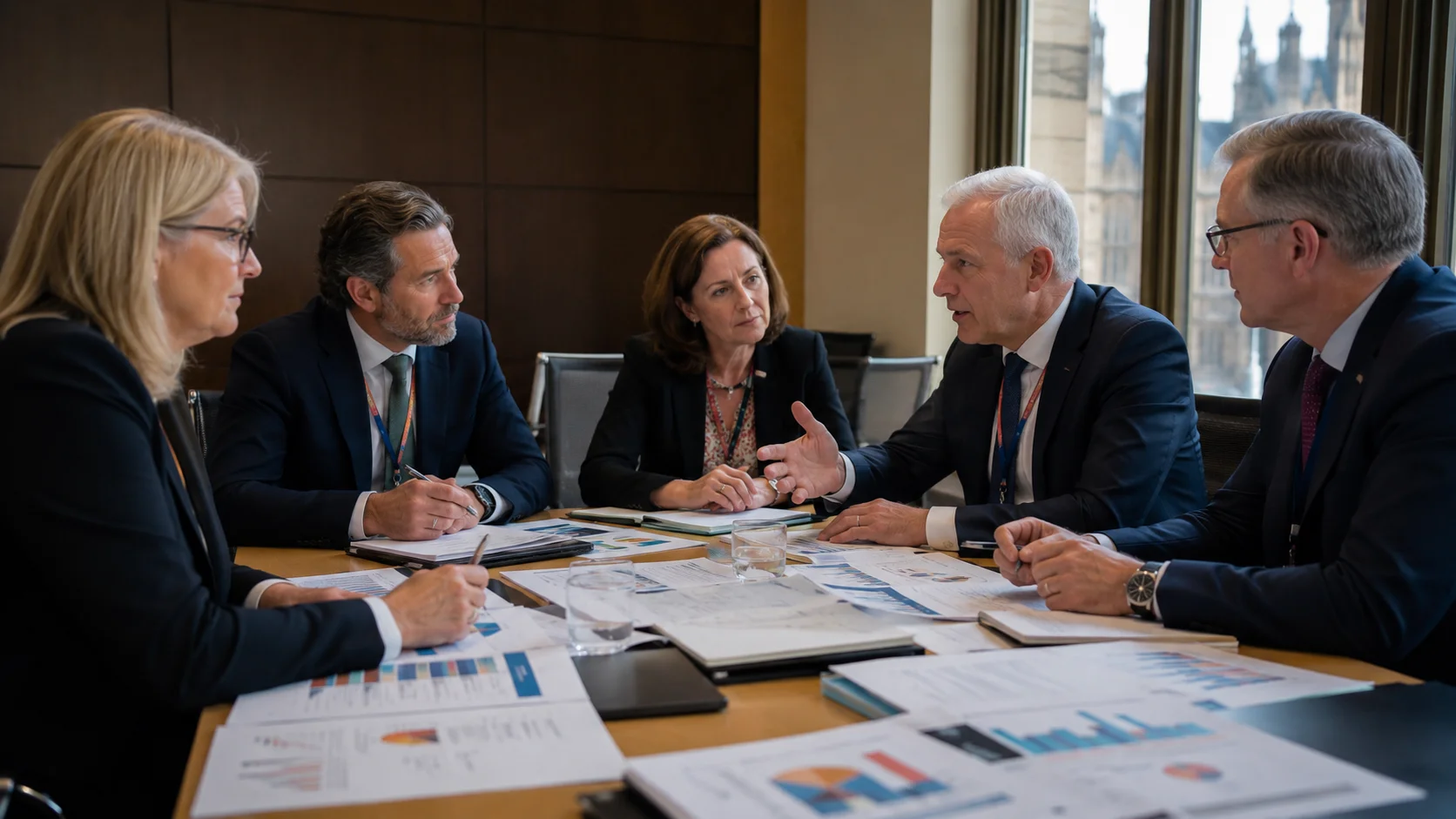
The annual salary for Members of Parliament (MPs) increased by 5% to £98,599 from April 1, 2026, making the MPs pay rise 2026 one of the most discussed UK political salary updates.
The rise was confirmed by the Independent Parliamentary Standards Authority, known as IPSA, and applies to MPs’ basic annual salary.
Key Takeaways:
- New MP salary: £98,599
- Previous salary: £93,904
- Annual increase: £4,695
- Effective date: 1 April 2026
- Increase breakdown: 3.5% cost-of-living rise + 1.5% benchmarking adjustment
This update has raised questions about fairness, public spending, parliamentary workload and how MPs’ pay compares with other workers.
How Much Is the MPs Pay Rise in 2026?
The MPs pay rise in 2026 is 5%, taking the basic annual salary of a Member of Parliament from £93,904 to £98,599. This means each MP receives an additional £4,695 per year before tax and deductions.
Salary Update Summary:
| Financial Year | MP Basic Salary | Annual Increase | Percentage Rise |
| 2024/25 | £91,346 | — | — |
| 2025/26 | £93,904 | £2,558 | 2.8% |
| 2026/27 | £98,599 | £4,695 | 5% |
In practical terms, the 2025/26 increase raised MPs’ basic salary from £91,346 to £93,904, adding £2,558 per year, or about £213.17 extra per month before deductions.
For 2026/27, the salary increased from £93,904 to £98,599, adding £4,695 per year, or about £391.25 extra per month before deductions. The 2026/27 rise applies from 1 April 2026, so it is already in effect.
Who Decides MPs’ Salaries in the UK?
MPs’ salaries are decided by the Independent Parliamentary Standards Authority, not directly by MPs or the Government.
IPSA was created after the parliamentary expenses scandal to bring independent oversight to MPs’ pay, pensions and business costs.
What Is IPSA and Why Was It Created?
IPSA was established under the Parliamentary Standards Act 2009. Its responsibilities include regulating MPs’ business costs, determining MPs’ pay and pension arrangements, and providing financial support so MPs can carry out their parliamentary duties effectively.
The organisation was created to ensure there is an independent body overseeing parliamentary finances instead of MPs influencing their own salary decisions
Independent Oversight of Parliamentary Pay
IPSA operates independently from both Parliament and the Government to ensure salary decisions are made fairly and transparently.
Key responsibilities include:
- Reviewing MPs’ salaries regularly
- Regulating parliamentary business costs
- Managing MPs’ expenses and pensions
- Conducting public consultations on pay decisions
- Benchmarking salaries against comparable senior roles
This independent structure helps reduce political influence over MPs’ pay decisions
Can MPs Vote on Their Own Salaries?
MPs do not directly vote to set their own basic salary. Instead, IPSA has the legal duty to review and determine MPs’ pay, including during the early stages of each parliamentary term.
This independent system was designed to improve public confidence and create a more transparent process around parliamentary pay decisions.
“IPSA is independent of Parliament and the Government. This allows decisions about MPs’ pay and business costs to be made without political interference.”
This independence played a key role in how the 2026 MPs salary increase was reviewed, assessed and ultimately approved.
Why Are MPs Receiving a 5% Pay Rise in 2026?
IPSA said the pay rise reflects the changing role of MPs, including heavier constituency workloads, more complex casework and increasing abuse and intimidation faced by MPs and their staff.
The 2026 increase is made up of two parts: a 3.5% cost-of-living increase and a 1.5% benchmarking adjustment. The benchmarking element follows IPSA’s comparison of MPs’ salaries with senior roles in civic society and parliamentarians in comparable democracies.
Reasons Behind the Pay Decision:
- MPs are handling more complex constituency casework.
- IPSA considered wider economic and fiscal conditions.
- The role was benchmarked against other senior public roles.
- IPSA reviewed pay in the context of similar democracies.
- Safety concerns and intimidation towards MPs were considered.
“The role of an MP has evolved. They are dealing with higher levels of complex casework, and abuse and intimidation towards MPs and their staff has been growing.”
This explanation has not ended the debate, but it shows that IPSA based the decision on more than inflation alone.
What Does the 2026 MPs Salary Increase Include?
The 2026 salary increase includes a standard cost-of-living uplift and an additional benchmarking adjustment. Together, they create the total 5% rise.
Pay Rise Breakdown:
| Element | Percentage | What It Means |
| Cost-of-living increase | 3.5% | Reflects rising living costs and economic conditions |
| Benchmarking adjustment | 1.5% | Moves MPs’ pay closer to comparable senior roles |
| Total increase | 5% | Raises salary to £98,599 |
The benchmarking adjustment is especially important because it signals IPSA’s longer-term view that MPs’ pay should move closer to roles with similar responsibility.
For readers, the key point is that this was not presented as a one-off inflation rise only. It was also part of a wider pay review.
Could MPs’ Salaries Reach £110,000 by the End of Parliament?
IPSA has indicated that MPs’ salaries could move towards around £110,000 by the scheduled end of the current Parliament, expected in 2029.
This does not mean MPs immediately receive £110,000, but it shows the direction IPSA may take over the next few years.
Projected Salary Context:
| Year/Period | Salary Position | Notes |
| 2025/26 | £93,904 | Interim salary uplift applied |
| 2026/27 | £98,599 | 5% increase confirmed |
| By scheduled end of Parliament | Around £110,000 | IPSA’s long-term benchmark aim |
IPSA said this target is based on comparisons with senior roles in the wider public sector and parliamentarians in similar democracies.
“In future years we will continue to consider prevailing economic and fiscal conditions when confirming annual pay decisions, taking into account the experience of people outside of parliament.”
This means future rises are not guaranteed at the same rate, but the £110,000 figure is now part of the public conversation.
Why Has the MPs Pay Rise Triggered Public Debate?

The MPs pay rise 2026 has attracted criticism because many households are still dealing with cost-of-living pressures, higher bills and concerns about public services.
For some voters, a 5% rise for MPs feels difficult to justify when other workers have received smaller increases.
Public Reaction to the Latest Salary Increase
Campaign groups and political commentators have questioned whether MPs should receive what some describe as an inflation-busting increase. The Taxpayers’ Alliance criticised the decision, arguing that the public would be frustrated to see politicians receive a sizeable pay rise during a difficult economic period.
How Does MPs’ Pay Compare with Other Public Sector Workers?
The comparison with other public sector pay awards has made the debate sharper. Reports noted that NHS staff in England and Wales, excluding doctors, dentists and senior managers, were set for a 3.3% rise from April. Civil Service departments were able to make average awards of up to 3.25% for 2025/26.
By contrast, MPs received 5%, although IPSA argues that this includes both cost-of-living and benchmarking elements.
Public Debate Factors:
- MPs’ rise is higher than some public sector pay awards.
- Public trust in politics remains a sensitive issue.
- Taxpayers fund parliamentary salaries.
- IPSA says MPs’ workloads and safety risks have increased.
The controversy is therefore not only about the number itself, but about timing, fairness and public confidence.
How Does the MPs Pay Rise Compare with Parliamentary Staff Pay?
The 2026 MPs pay rise has been criticised because parliamentary staff were offered a lower increase. MPs received a 5% salary rise, while staff were offered an optional 3.5% automatic uplift. This gap has caused frustration among staff and trade union representatives.
MPs Pay Rise vs Parliamentary Staff Pay:
| Group | Pay Increase | Main Concern |
| MPs | 5% | Salary rose to £98,599 |
| Parliamentary staff | 3.5% | Lower uplift than MPs |
A Unite survey found that 91.5% of more than 600 respondents said they would reject the 3.5% offer. Staff concerns included low pay, insecure work, heavier workloads and burnout.
Although IPSA sets MPs’ salaries and provides staffing budgets rather than directly setting every staff member’s pay, critics argue the comparison is still important because staff handle much of the constituency workload.
What Does the MPs Pay Rise Mean for UK Taxpayers?
For UK taxpayers, the 2026 MPs pay rise means a higher publicly funded salary bill for elected representatives. Supporters argue that fair pay helps attract capable candidates, reflects the responsibilities of the role and supports effective representation.
However, critics may question whether a 5% increase feels fair when many workers are still facing pressure from living costs.
MPs’ basic salaries are funded by taxpayers, while expenses are separate and used for parliamentary duties. IPSA sets MPs’ pay independently, not the Government, which is intended to reduce political influence.
Even so, public trust depends on transparency, accountability and whether the rise appears proportionate in the wider economic climate.
Conclusion
The MPs pay rise 2026 increased MPs’ basic annual salary by 5% to £98,599 from April 1, 2026. The rise added £4,695 per year to the previous salary of £93,904.
IPSA said the increase includes a 3.5% cost-of-living uplift and a 1.5% benchmarking adjustment. It also said MPs’ pay could move towards around £110,000 by the scheduled end of the current Parliament.
While IPSA points to increased workloads, complex casework and safety concerns, the rise remains controversial because of comparisons with public sector workers, parliamentary staff and taxpayers facing cost pressures.
FAQs About MPs Pay Rise 2026
How much extra will MPs receive per month after the 2026 pay rise?
MPs receive an additional £4,695 per year before tax, which is around £391.25 extra per month before deductions.
When was the MPs pay rise officially announced?
IPSA announced the 2026/27 MPs salary decision on 2 March 2026.
Are MPs’ expenses included in their annual salary?
No. MPs’ expenses are separate from salary and cover work-related costs such as offices, staffing, accommodation and travel.
Do ministers earn more than standard MPs?
Yes. MPs who hold ministerial posts or certain parliamentary roles may receive additional pay on top of their basic MP salary.
How often are MPs’ salaries reviewed in the UK?
IPSA is required to review MPs’ pay early in each parliamentary term and can also make annual pay decisions.
What factors does IPSA consider before increasing MPs’ pay?
IPSA considers economic conditions, public consultation, benchmarking, parliamentary responsibilities and the wider context outside Parliament.
How does UK MPs’ pay compare internationally?
UK MPs are paid more than some comparable democracies but less than parliamentarians in countries such as the US, Germany, Australia and Canada.