


UK drivers using their own vehicles for work can still claim valuable mileage tax relief after HMRC confirmed the 45p per mile allowance will remain in place for the 2026-27 tax year.
The scheme allows eligible employees and workers to recover costs linked to business travel, including fuel and vehicle wear and tear.
While many motorists remain concerned about rising fuel prices and motoring expenses, the confirmed HMRC mileage rates offer some financial relief for petrol, diesel and even electric vehicle drivers.
Key points:
- HMRC will continue paying 45p per mile for the first 10,000 business miles
- The rate drops to 25p per mile after 10,000 miles
- Employees using personal vehicles for work may qualify
- Commuting and personal trips cannot be claimed
- Drivers must keep accurate mileage records
What Is the HMRC Petrol Driver Tax Handout?

The HMRC petrol driver tax handout refers to Approved Mileage Allowance Payments (AMAP), which allow employees to claim tax relief when using their own vehicle for work purposes.
Instead of covering only fuel, the allowance is designed to help motorists manage the broader costs associated with driving for business, including maintenance, insurance, servicing and depreciation.
The scheme remains particularly important in 2026 as many UK drivers continue facing higher motoring expenses. HMRC’s decision to maintain the allowance at 45p per mile provides consistency for workers who rely on their own cars for meetings, site visits or customer appointments.
An HMRC spokesperson said:
“Approved mileage rates are intended to provide a fair contribution towards the costs employees face when using their own vehicles for business journeys.”
Although often referred to as a “tax handout”, the system technically works as tax relief rather than a direct payment for every driver. If an employer does not fully reimburse mileage costs, workers may claim the difference from HMRC.
Mileage allowance overview:
| Vehicle Type | First 10,000 Miles | Over 10,000 Miles |
| Cars and Vans | 45p per mile | 25p per mile |
| Motorcycles | 24p per mile | 24p per mile |
| Bicycles | 20p per mile | 20p per mile |
These rates continue to apply throughout the 2026-27 tax year. Drivers should still review HMRC guidance before making claims.
Who Can Claim The 45p Per Mile Mileage Relief?
Employees who use their own vehicles for genuine business travel may qualify for HMRC mileage relief. This includes workers attending meetings, travelling between workplaces or visiting customers during working hours.
Business Mileage Eligibility Rules
HMRC generally allows claims where a private vehicle is used solely for business purposes. Many professions can benefit from this arrangement, including:
- Sales representatives
- Tradespeople
- Care workers
- Consultants
- Delivery staff using personal vehicles
Drivers can claim either through their employer or directly from HMRC if mileage expenses are not fully reimbursed. However, the amount claimable may vary depending on what an employer already pays.
Which Vehicles Qualify for HMRC Mileage Claims?
The allowance is not restricted to petrol cars. HMRC applies the same mileage rates to several vehicle types:
| Vehicle Category | Eligible For 45p Rate? |
| Petrol Cars | Yes |
| Diesel Cars | Yes |
| Electric Vehicles | Yes |
| Vans | Yes |
Electric vehicle drivers have particularly benefited from the current structure because charging costs are often significantly lower than petrol expenses.
The RAC previously explained:
“This can help drivers save a significant amount, especially as electricity costs per mile can be far lower than petrol or diesel.”
The rules remain consistent across the UK, making the system relatively straightforward for employees using personal vehicles for work-related journeys.
How Much Can Drivers Claim from HMRC In 2026-27?

HMRC has confirmed that drivers can continue claiming 45p per mile for the first 10,000 business miles completed during the tax year. Once this threshold is exceeded, the rate falls to 25p per mile.
The mileage allowance is designed to account for several motoring expenses rather than fuel alone. Petrol prices may fluctuate throughout the year, but HMRC has chosen not to increase the rates for 2026.
Example mileage claim calculation:
| Annual Business Miles | HMRC Rate | Potential Claim Value |
| 5,000 miles | 45p | £2,250 |
| 10,000 miles | 45p | £4,500 |
| 15,000 miles | 45p + 25p | £5,750 |
These figures illustrate how valuable the relief can become for employees regularly travelling for work. Drivers should remember that claims may reduce if employers already provide mileage reimbursements.
Even though some motorists hoped for an increase due to rising fuel prices, HMRC has maintained the existing structure. The current rate still provides substantial support compared with many private fuel reimbursement schemes.
What Journeys Count Towards a Mileage Claim?
Not every trip made during the working day qualifies for tax relief. HMRC applies strict rules regarding what counts as business mileage.
Business Trips That Qualify
Qualifying journeys typically include travel between workplaces or trips made directly for business purposes. Examples include visiting clients, attending temporary sites or travelling to meetings away from a permanent workplace.
Eligible business journeys often include:
- Driving to client appointments
- Visiting temporary workplaces
- Travelling between offices
- Attending training at a separate location
Employees should ensure journeys are directly connected to work responsibilities before claiming mileage relief.
Journeys You Cannot Include
HMRC does not allow claims for ordinary commuting between home and a permanent workplace. Personal trips also remain excluded, even when completed during working hours.
Journeys that cannot be claimed include:
- Daily travel to the office
- School runs
- Shopping trips
- Personal detours during work travel
Commuting And Personal Travel Rules
Understanding the distinction between commuting and business mileage is essential. Many rejected claims occur because drivers incorrectly include everyday commuting costs.
An RAC representative stated:
“Drivers should maintain detailed records and ensure they only include genuine business mileage when making a claim.”
Following HMRC guidance carefully reduces the risk of disputes or rejected applications later on.
How Do You Claim The 45p Per Mile Tax Relief?

Drivers can claim mileage relief either through their employer or directly from HMRC. If an employer pays less than the approved mileage allowance rate, employees may claim tax relief on the shortfall.
Claims can usually be submitted online through HMRC’s portal or by using a P87 form. Higher-value claims may sometimes require a self-assessment tax return instead.
To complete a claim successfully, drivers should provide:
- Dates of each work journey
- Start and end destinations
- Purpose of the trip
- Total business miles completed
- Amount already paid by the employer, if any
Accurate documentation remains essential throughout the process. HMRC may request supporting evidence if claims appear inconsistent or unusually high.
Many employees fail to realise they can backdate mileage claims for previous tax years if they missed earlier opportunities. However, deadlines still apply, so drivers should act promptly.
Why Is HMRC Keeping the Mileage Rate At 45p Per Mile?
The decision to maintain the mileage rate reflects HMRC’s view that the current allowance still broadly covers motoring expenses for most drivers. Although fuel prices remain volatile, the allowance also factors in maintenance and ownership costs.
Fuel Costs and Vehicle Wear Explained
The 45p rate is designed to contribute towards:
- Fuel expenses
- Tyre wear
- Insurance costs
- Servicing and maintenance
- Vehicle depreciation
Some petrol vehicles now cost around 20p per mile in fuel alone, meaning many drivers argue the allowance no longer fully reflects real-world motoring costs. Despite this, HMRC has opted against increasing the rate for 2026.
Impact On Petrol, Diesel and EV Drivers
Electric vehicle drivers may benefit most from the current structure because charging costs are often lower than petrol or diesel fuel expenses. Some EV users reportedly pay as little as 5p per mile for charging.
However, petrol and diesel drivers still receive important support through the allowance, particularly for workers regularly covering long distances.
The continued rate stability also provides businesses and employers with predictable reimbursement structures for the year ahead.
What Records Should You Keep for HMRC Mileage Claims?
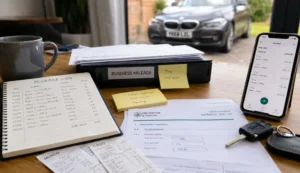
Keeping detailed mileage records is essential for successful claims. HMRC expects drivers to maintain accurate evidence showing when and why business journeys occurred.
Drivers should record:
- Journey dates
- Mileage totals
- Start and destination points
- Purpose of travel
Digital mileage tracking apps are becoming increasingly popular because they simplify record keeping and reduce administrative mistakes. However, handwritten logs remain acceptable if they are clear and accurate.
Employees should retain records for several years in case HMRC requests evidence during future reviews or investigations. Failing to provide proper documentation could result in rejected claims or repayment demands.
Could UK Drivers Save More by Claiming Mileage Relief?
For many workers, mileage tax relief remains an overlooked financial benefit that can save hundreds or even thousands of pounds annually. Employees who regularly travel for work but fail to claim may be missing out on significant support.
The 45p per mile allowance continues offering valuable assistance despite rising motoring costs. While some industry experts believe the rate should increase further, the current structure still provides meaningful relief for drivers across the UK.
Workers should carefully review their business mileage records and employer reimbursements to ensure they are not underclaiming. With fuel, insurance and maintenance costs remaining high, claiming eligible mileage relief could make a noticeable difference to household finances in 2026.
Conclusion
HMRC’s decision to keep the 45p per mile mileage allowance in place for 2026-27 continues to offer valuable support for UK drivers using personal vehicles for work.
Whether driving a petrol, diesel or electric vehicle, eligible employees could reduce their travel costs through tax relief.
Keeping accurate mileage records and understanding HMRC’s rules remains essential for making a successful claim.
FAQs About
Can employees claim mileage if they use a family car for work?
Yes, employees may still claim mileage relief if they use a family member’s vehicle for qualifying business journeys, provided they personally cover the running costs linked to work travel.
How long should mileage records be kept for HMRC checks?
HMRC generally recommends keeping mileage records for at least five years after the relevant tax return submission deadline.
Is there a deadline for making a mileage tax relief claim?
Drivers can usually backdate mileage claims for up to four tax years, although claims should be submitted as early as possible.
Can drivers claim mileage relief for temporary workplaces?
Yes, journeys to temporary workplaces often qualify for mileage relief if they meet HMRC’s business travel rules.
What happens if an employer already pays part of the mileage costs?
Employees may still claim tax relief on the difference between what the employer paid and the approved HMRC mileage rate.
Are motorcycle mileage rates different from car mileage rates?
Yes, motorcycles currently have a separate HMRC approved mileage rate of 24p per mile.
Can company car drivers claim the same 45p per mile allowance?
No, company car drivers usually follow separate advisory fuel rates rather than the standard 45p per mile allowance.