

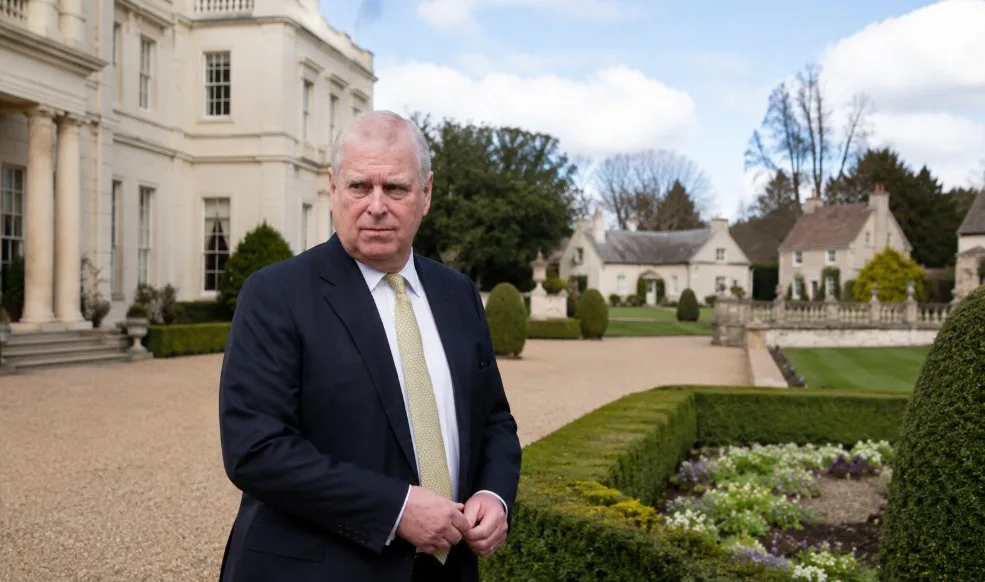
Andrew Mountbatten-Windsor rental income drew attention after a National Audit Office review confirmed that three cottages on the Royal Lodge estate were sub-let under an approved lease arrangement.
Although the exact amount earned was not disclosed, the arrangement remained in place until April 2026. The revelation has sparked ongoing discussions about royal property management, transparency, and accountability.
Key Points:
- Andrew Mountbatten-Windsor received rental income from three cottages at Royal Lodge.
- The exact amount earned was not disclosed in the NAO report.
- The sub-letting arrangement was allowed under his lease agreement.
- External property estimates suggest potential earnings of up to £180,000 annually.
- The findings have prompted renewed discussions about royal housing arrangements and accountability.
What Was Reported About Andrew Mountbatten-Windsor Rental Income?
The National Audit Office review confirmed that Andrew Mountbatten-Windsor received rental income through the sub-letting of three cottages located on the Royal Lodge estate. The cottages formed part of a wider property arrangement linked to his long-standing lease of Royal Lodge.
The disclosure attracted considerable attention because it provided official confirmation that rental income was generated from the estate.
However, the report stopped short of revealing the actual amount earned. As a result, the story quickly became less about the existence of rental income and more about the unanswered question regarding its value.
“Transparency in public-facing property arrangements is essential to maintaining confidence in institutional governance,” noted a senior public finance analyst reviewing royal estate disclosures.
The report also highlighted wider residential arrangements involving other members of the Royal Family, placing the rental income issue within a broader discussion about royal property management and funding structures.
How Did Andrew Mountbatten-Windsor Earn Rental Income from Royal Lodge?
The income was generated through a lease provision that allowed three cottages on the Royal Lodge estate to be sub-let to tenants. These properties were separate from the main Royal Lodge residence and formed part of the wider estate.
The arrangement remained in place until April 2026. Although Andrew Mountbatten-Windsor has since relocated from Royal Lodge, he reportedly continues to hold the lease until October 2026.
Key Facts About the Sub-Letting Arrangement:
- Three cottages were permitted to be sub-let under the lease terms.
- The cottages were located within the Royal Lodge estate.
- The arrangement continued until April 2026.
- The lease itself remains active until October 2026.
- The identities of the tenants were not publicly disclosed.
The available information suggests that the rental arrangements complied with the lease agreement, although the financial details were not made public. This distinction is important because the controversy centres on transparency rather than legality.
How Much Rental Income Was Actually Disclosed?
The central question surrounding Andrew Mountbatten-Windsor rental income is straightforward: how much money was earned?
The official answer is that no figure was disclosed. The NAO report confirmed the existence of rental income but did not specify the revenue generated, the rental rates charged, or the total earnings accumulated over the years.
Why Did the NAO Report Not Give an Exact Rental Income Figure?
The report focused on explaining property arrangements rather than publishing detailed financial accounts for every residential agreement. Consequently, readers were informed that rental income existed without being given access to the exact financial figures.
The following table summarises what is known and unknown regarding the rental income:
| Information Category | Status |
| Rental income existed | Confirmed |
| Three cottages involved | Confirmed |
| Sub-letting permitted under lease | Confirmed |
| Exact annual income | Not disclosed |
| Total earnings received | Not disclosed |
| Tenant identities | Not disclosed |
| Duration of arrangement | Confirmed until April 2026 |
Because the precise figures remain undisclosed, much of the public discussion has relied on estimates rather than confirmed financial data. This absence of detail continues to fuel speculation.
Could the Three Royal Lodge Cottages Have Generated Up to £180,000 a Year?
Property professionals have suggested that the cottages may have generated substantial rental revenue due to their location, security, and association with a prestigious royal estate.
Some valuations indicate that the combined rental potential of the three properties could have reached as much as £180,000 annually under favourable market conditions. However, these estimates should not be confused with verified earnings.
Factors Influencing Potential Rental Value:
- Prime Berkshire location.
- Enhanced privacy and security.
- Association with a historic royal estate.
- Limited supply of comparable properties.
- Strong demand for exclusive accommodation.
Palace sources suggested the rental income may have primarily covered maintenance and operating costs rather than generated significant profit. However, without official figures, this cannot be verified. As a result, any income estimates remain speculative due to limited financial disclosure
Why Is the Royal Lodge Lease Central to the Rental Income Question?
The Royal Lodge lease forms the foundation of the entire discussion because it established the rights and obligations associated with the estate. When Andrew Mountbatten-Windsor took on the lease, reports indicated that he funded approximately £7.5 million in repairs and refurbishment works.
In return, the lease structure reportedly involved a peppercorn rent arrangement rather than conventional monthly rental payments.
What Does Peppercorn Rent Mean in Andrew Mountbatten-Windsor’s Case?
A peppercorn rent is a nominal payment used in certain long-term property agreements. Instead of paying substantial ongoing rent, the tenant may assume responsibility for significant maintenance, restoration, or investment obligations.
The following table outlines the reported lease structure:
| Lease Element | Reported Arrangement |
| Property | Royal Lodge Estate |
| Leaseholder | Andrew Mountbatten-Windsor |
| Initial investment | Approximately £7.5 million repairs |
| Monthly rent | Peppercorn rent arrangement |
| Sub-letting rights | Permitted for three cottages |
| Lease expiry | October 2026 |
“Long-term heritage property leases often balance restoration obligations against traditional rental structures,” explained a property governance specialist.
Understanding this lease framework helps explain why questions about rental income have attracted public interest. Many observers view the lease and sub-letting rights as interconnected elements of the same financial arrangement.
Who Paid for Other Royal Family Accommodation Mentioned in the Review?
The review extended beyond Royal Lodge and examined housing arrangements involving other members of the Royal Family.
Among the notable findings was confirmation that accommodation costs for Princess Beatrice and Princess Eugenie are paid through the monarch’s personal funds. Both occupy residences within royal palaces despite not serving as working royals.
The report indicated that:
- Princess Beatrice resides at St James’s Palace.
- Princess Eugenie occupies accommodation at Kensington Palace.
- Rent is paid through the Privy Purse.
- Palace maintenance is supported through the Sovereign Grant.
This distinction between personal funding and public funding is important because it illustrates the complexity of royal property arrangements. Different residences operate under different financial structures, making direct comparisons difficult.
The review therefore offered a broader picture of how royal housing is managed across multiple properties and occupants.
Why Has the Rental Income Report Raised Questions About Royal Property Transparency?
The issue has gained attention largely because the report confirmed income existed while withholding the specific figures. In public accountability discussions, partial disclosure often generates more questions than complete transparency.
Many observers argue that the public can only properly assess such arrangements when sufficient financial information is available. Others contend that private lease agreements should retain a degree of confidentiality.
“The challenge is balancing legitimate privacy interests with the public expectation of transparency where high-profile public institutions are concerned,” stated a governance consultant.
The discussion is not solely about Andrew Mountbatten-Windsor. Instead, it reflects broader questions regarding how royal properties are managed, funded, and reported.
As scrutiny of public institutions continues to increase, transparency expectations are likely to remain a significant topic in future reviews.
What Could Change for Royal Property Rules in the Future?
The publication of the report has sparked speculation about whether future reforms could reshape royal property arrangements.
Reports suggest that future royal leadership may place greater emphasis on cost efficiency, accountability, and modernisation. Potential changes discussed by commentators include tighter controls on housing benefits, revised accommodation policies, and restrictions on certain property arrangements.
While no official reforms have been announced specifically in response to the Royal Lodge findings, the broader conversation reflects changing public expectations regarding transparency and governance.
The Andrew Mountbatten-Windsor rental income story may therefore be remembered not only for the undisclosed figures but also for the wider questions it raised about the future management of royal estates.
Conclusion
Andrew Mountbatten-Windsor rental income has attracted attention following confirmation that cottages on the Royal Lodge estate were sub-let under an approved lease arrangement.
While the existence of rental income has been verified, the exact amount earned has not been publicly disclosed. The findings have highlighted broader questions surrounding royal property management, transparency, and accountability.
With limited official financial details available, public interest in the matter is likely to continue as discussions about the governance of royal estates evolve.
Frequently Asked Questions
Was Andrew Mountbatten-Windsor allowed to sub-let the cottages?
Yes. The lease reportedly permitted the sub-letting of three cottages located on the Royal Lodge estate.
When did the Royal Lodge cottage sub-letting arrangement end?
The arrangement is reported to have ended in April 2026.
Does Andrew Mountbatten-Windsor still hold the Royal Lodge lease?
Yes. Reports indicate that he continues to hold the lease until October 2026.
Who owns the Royal Lodge estate?
Royal Lodge forms part of the Crown Estate property portfolio, although it is occupied through lease agreements.
Did the NAO confirm whether the rental income was private profit?
No. The report confirmed the existence of rental income but did not specify whether it represented profit after costs.
Why are Princess Beatrice and Princess Eugenie mentioned in the review?
The review examined multiple royal housing arrangements, including accommodation provided to Princess Beatrice and Princess Eugenie.
What is the difference between the Privy Purse and the Sovereign Grant?
The Privy Purse refers to the monarch’s personal funds, while the Sovereign Grant is public funding used to support official royal duties and property maintenance.