

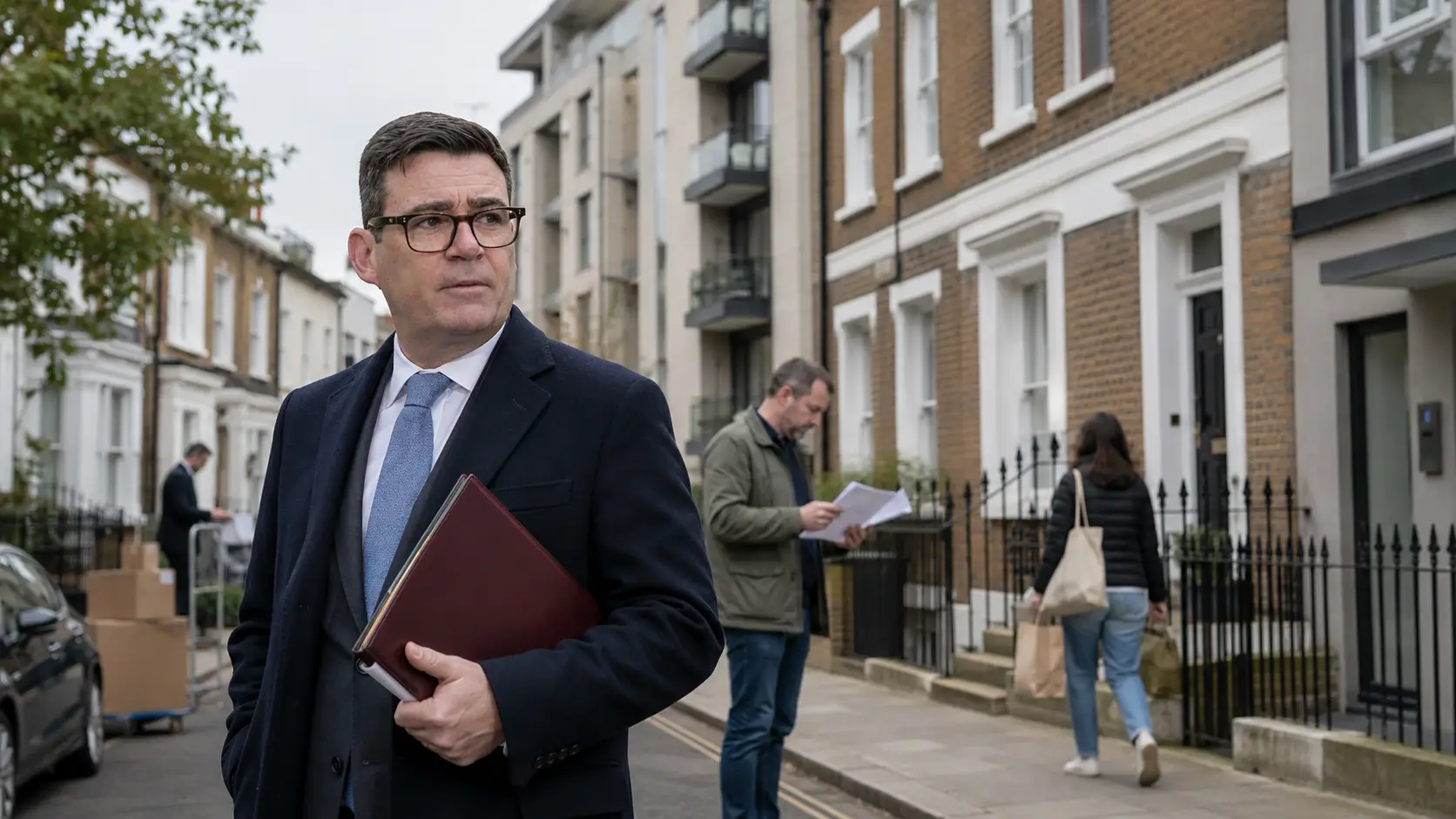
The Andy Burnham property tax impact cannot yet be calculated because the Government has not published a final tax rate, valuation method, liability framework or implementation date. Replacing Council Tax with an owner-paid property or land-value levy could increase landlords’ annual costs, but it would not automatically cause an equivalent rise in rents.
Tenants might stop paying Council Tax directly under such a system. Their total housing costs would therefore depend on whether any rent increase was smaller or larger than the Council Tax bill removed.
Key Takeaways
- The property tax remains an idea under consideration, not an enacted policy.
- Landlords could face higher recurring costs, particularly in expensive locations.
- Rent rises and landlord sales are possible responses, not confirmed outcomes.
- Tenants could save if Council Tax ends and rents rise by less than that saving.
- A separate 2% wealth-tax proposal for households worth over £100 million is not the same policy.
The decisive details are who pays, what is taxed and which existing charges are replaced.
What Is Andy Burnham’s Latest Property Tax Proposal?

Burnham has raised the possibility of reforming the existing property-tax system, including replacing Council Tax and reconsidering Stamp Duty Land Tax. However, no formal plan currently establishes whether the new charge would apply only to underlying land or to the combined value of land and buildings.
That distinction matters. A genuine land value tax generally targets the site’s value without taxing improvements, whereas a wider property tax may rise when a home is extended or substantially upgraded.
Burnham became Prime Minister on 20 July 2026, as confirmed by the official Prime Minister profile. His Government has said it will publish a ten-year plan, but a detailed nationwide replacement for Council Tax has not yet been announced.
The debate partly reflects weaknesses in a Council Tax system still based on 1991 property values in England. Government analysis has contrasted a roughly £10 million Mayfair home paying about £2,100 with Band D properties now worth around £400,000 in Darlington or Blackpool paying approximately £2,400 to £2,600.
Why Has The Proposal Caused Concern Across The UK Property Market?
The main concern is that liability could move from occupiers to property owners. For landlords, this could create an annual expense that reduces net rental yield, especially where land or property values are high.
The discussion also comes during continuing pressure on household finances. The Government has already reduced domestic electricity VAT from 5% to zero from 1 October 2026, estimating a typical annual saving of £45 on top of £150 previously removed from bills. The measure is expected to cost about £850 million in 2026–27 and is being funded through cancellation of a £1.8 billion digital identity programme.
Burnham said his immediate aim was to “give people some breathing space now, some help with the cost of living”.
Other measures include reducing the maximum participating bus fare outside London from £3 to £2 on 1 January 2027. The policy runs throughout 2027, involves £454 million including devolved funding, and follows evidence that the previous £2 cap generated an estimated 30 million additional journeys over ten months.
These commitments increase scrutiny of how wider tax and spending reforms would be funded while the Government maintains its fiscal rules.
How Could The Andy Burnham Property Tax Impact Landlords?
A recurring owner-paid levy could affect landlords differently according to property value, location, borrowing costs and existing rental yield. It would be most significant where the tax bill formed a large share of annual net income.
Landlord Costs, Yields And Tax Liability
The financial effect could include:
- Reducing net rental yields after mortgage and maintenance costs.
- Making highly leveraged properties less profitable.
- Increasing annual expenses in high-value locations.
- Encouraging investors to favour lower-value regions.
- Affecting limited-company and personally owned portfolios differently.
- Changing the attractiveness of lower-rent or below-market tenancies.
The gross bill alone would not show the full impact because the Government could remove another tax, introduce allowances or permit deductions.
Could Landlords Pass The New Cost To Tenants?
Landlords could attempt to recover additional costs through higher rents, but market conditions determine how much can actually be passed on. Tenant income, competing listings, local demand, tenancy rules and the condition of the property would all influence achievable rents.
A senior residential researcher at Savills warned that additional costs could prompt landlords to reconsider remaining in the sector and could contribute to rent and supply pressures.
Chris Norris of the NRLA similarly said reforms should avoid unintended consequences, including higher rents and reduced supply. These are industry warnings rather than measured effects of a completed policy.
Selling Decisions And Portfolio Restructuring
Some landlords might sell low-yielding properties, reduce borrowing or reorganise their portfolios. Others might move towards lower-value areas, higher-density rentals or properties with stronger potential returns.
A landlord sale would not always remove a home from the rental sector. Another investor or housing provider could buy it, although a sale to an owner-occupier would reduce local rental stock.
Could Tenants Pay More Or Save If Council Tax Is Replaced?
Under the present system, resident tenants usually pay Council Tax, although owners are liable in certain cases, including some houses in multiple occupation and empty properties. The current Council Tax liability rules also provide a 25% discount for many single-adult households.
A reform transferring liability to landlords could remove tenants’ direct Council Tax bills. The meaningful comparison would therefore be total rent and Council Tax before reform against total rent after reform.
Tenant Cost Scenarios
| Possible Outcome | Potential Effect On Tenants |
| Council Tax ends and rent is unchanged | Total housing costs could fall |
| Rent rises by less than the removed bill | The tenant could retain a net saving |
| Rent rises by a similar amount | Total costs could remain broadly comparable |
| Rent rises by more than the removed bill | Total housing costs could increase |
| The landlord sells the property | The effect depends on the buyer and tenancy protections |
These scenarios are illustrative because no official rate or rent-pass-through evidence exists for the proposed system.
How Might Homeowners And Homebuyers Be Affected?

Homeowners would not automatically pay more. The result would depend on their property type, location, present Council Tax band, income and any exemptions or deferral arrangements.
Would Every Homeowner Face A Higher Annual Bill?
A land-based tax could produce higher bills for modest homes on valuable sites while treating larger homes in lower-value locations differently. Asset-rich but income-poor households, including some UK pensioners, could face liquidity problems unless payment deferrals or caps were available.
Leaseholders would also need clarity on whether liability followed ownership of the flat, the freehold interest or an allocated share of the site’s value.
Property Prices, Affordability And Regional Variation
A higher recurring ownership cost could influence mortgage affordability and the amount buyers are willing to pay. Effects could be stronger in London and parts of southern England where land values are comparatively high.
Replacing Stamp Duty could produce an offsetting benefit by reducing the upfront cost of moving. The final housing-market effect would depend on whether that saving outweighed the capitalised value of future annual payments.
What Could The Proposal Mean For UK Rents And Rental Supply?
The effect on the private rented sector would depend on how many landlords faced a material increase and how they responded. Predictions of nationwide rent rises or mass exits cannot be confirmed from a proposal without rates or thresholds.
Rental Market Factors
- Local demand would determine whether landlords could raise rents.
- Low-yielding properties could be more vulnerable to sale.
- Investor-to-investor sales would preserve rental supply.
- Sales to owner-occupiers could reduce the number of rental homes.
- Regional land values could create uneven effects.
- Council housebuilding could ease pressure, but delivery would take time.
- Existing tax and regulatory costs would shape landlords’ combined response.
Burnham has linked housing affordability to insufficient social housing, arguing that inadequate supply leaves the benefits system supporting higher private rents. His commitment to additional council housing could therefore be as important to long-term rents as the design of any property tax.
How Is Burnham’s Property Tax Different From The £100m Wealth Tax?

The property-tax discussion concerns homes or land and could affect a broad group of owners. The separate wealth-tax proposal would target households with total assets above £100 million.
Economists Gabriel Zucman and Ben Tippet proposed a 2% minimum charge that they estimate could raise £10 billion annually while affecting fewer than 1,000 UK households. The assessment would include property, private businesses, pensions, land, art and controlled charitable assets.
Property Tax And Wealth Tax Compared
| Feature | Property Or Land Tax | £100m Wealth-Tax Proposal |
| Main tax base | Property or underlying land | Combined household assets |
| Potential reach | Could cover many property owners | Fewer than 1,000 households |
| Suggested rate | Not announced | 2% minimum charge |
| Estimated revenue | Not available | £10 billion annually |
| Council Tax replacement | Potentially | No |
| Current status | Policy idea under discussion | Academic proposal |
The wealth-tax plan also proposes continued liability for at least ten years after a household leaves the UK. Its authors argue that aggregating family wealth and applying the tax across a broad asset base would limit avoidance through companies, trusts and asset-specific exemptions.
For context, an earlier international proposal suggested a 2% minimum tax on the world’s approximately 3,000 billionaires could raise £250 billion a year. Separate research has estimated that more than $70 trillion—about £52 trillion—could be inherited globally over the following decade.
None of these figures represents expected revenue from Burnham’s possible UK property-tax reform.
Which Policy Details Will Determine Who Gains Or Loses?
The headline proposal is insufficient to estimate household bills. Distributional effects would depend on rate design, valuation and the treatment of people unable to pay immediately.
Rates, Thresholds, Exemptions And Reliefs
Policymakers would need to decide whether the tax had a tax-free allowance, multiple bands or a flat percentage rate. Relief could be required for low-income owners, social housing, pensioners, agricultural property and homes undergoing exceptional circumstances.
An existing but separate measure illustrates how design changes outcomes. The high-value surcharge consultation details cover an additional charge from April 2028 on owners of English residential properties worth at least £2 million. It is expected to affect less than 1% of homes and raise around £430 million annually.
That surcharge uses four value bands, rises with inflation and sits alongside existing Council Tax. It should not be confused with a wholesale replacement of Council Tax.
Who Would Be Legally Responsible For Paying?
The UK Government would need to define liability for freeholders, leaseholders, joint owners, companies, housing associations and institutional investors. It would also need rules for mixed-use buildings and separately rented rooms.
Legal liability does not determine who ultimately bears the economic cost. An owner may pay the bill but recover part through rent, while market pressure may force the owner to absorb the remainder.
Valuation, Transition And Local-Government Funding
A workable system would require consistent valuations, an appeal process and rules for regular updates. A land-only levy would be particularly complex where flats, shared freeholds and mixed commercial-residential sites divide rights to the same land.
Transition rules would also determine whether bills changed immediately or were phased in. Councils would need clarity on revenue allocation, administration costs, arrears, enforcement and support for vulnerable households.
When Could The Proposal Take Effect And What Happens Next?

There is no confirmed implementation date for replacing Council Tax or Stamp Duty with Burnham’s alternative property tax. Significant tax reform would require policy development, fiscal modelling, consultation, legislation and new valuation systems.
Developments To Watch
- Publication of the Government’s ten-year plan.
- A Treasury consultation or Budget announcement.
- Confirmation of the taxable asset and liable owner.
- Proposed rates, bands and tax-free thresholds.
- Treatment of landlords, leaseholders and main homes.
- Council Tax and Stamp Duty replacement arrangements.
- Distributional and rental-market impact assessments.
- Draft legislation and a proposed start date.
Until those documents are published, precise claims about bills, rents, house prices or tax revenue remain speculative.
Conclusion
The Andy Burnham property tax impact could be substantial, but its direction is not yet clear. Landlords could face additional annual costs, while tenants could lose a Council Tax bill but encounter higher rent.
Industry warnings about landlord exits and reduced rental supply identify credible risks, not inevitable results. The final balance between winners and losers will depend on rates, reliefs, valuation rules, regional differences and which existing taxes are abolished.
FAQs
Could Pensioners Defer The Tax Until Their Home Is Sold?
No deferral scheme has been confirmed for Burnham’s possible reform. Such protection could become important for homeowners with valuable properties but limited regular income.
Would Landlords Deduct The Tax From Rental Income?
No tax-deduction rules have been announced. Deductibility would depend on whether future legislation classified the payment as an allowable property-business expense.
Could Limited-Company Landlords Be Treated Differently?
Different rules are possible because companies and individuals are taxed through separate systems. No special liability or relief for company-owned rental homes has been confirmed.
How Could The Tax Work For Leasehold Flats?
The Government would have to decide how a site’s value was divided between flats and the freehold interest. Lease terms alone may not provide a consistent basis for allocating a national land-value charge.
Could Second Homes And Empty Properties Face Higher Rates?
A future system could apply supplements or restrict relief for additional homes. No confirmed proposal currently specifies how second homes or empty properties would be treated.
Would Home Improvements Increase The Tax Bill?
Improvements could raise liability under a whole-property value tax. They should have less direct effect under a genuine land-only tax because the underlying site, rather than the building, is assessed.
Could Each UK Nation Use A Different System?
Yes, because property taxation and local-government arrangements differ across the UK. A reform announced for England would not automatically apply in the same form to Scotland, Wales or Northern Ireland.
Note
The property tax must be described as a proposal under consideration, not an enacted replacement for Council Tax. No rate, threshold, valuation model, exemption or implementation date has been confirmed.
Warnings about rising rents and landlord sales must be attributed as forecasts. The separate 2% minimum tax proposed for households worth more than £100 million must not be presented as Burnham’s confirmed property-tax policy.