

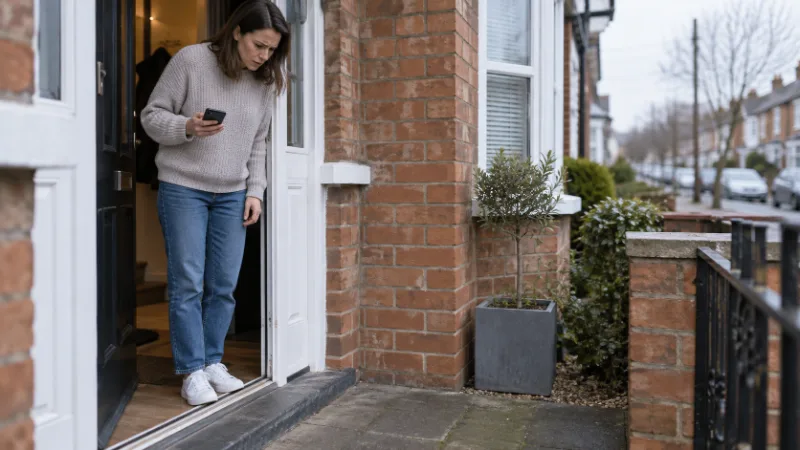
If DPD says delivered but you have not received your parcel, check the delivery photo, safe places, neighbours, reception areas and the delivery address first. Save screenshots of the tracking information and report the missing parcel promptly.
For an order bought from an online retailer, you should normally contact the retailer rather than trying to make a compensation claim directly against DPD. The seller is generally responsible for getting the goods to you or another person you authorised to receive them.
DPD can investigate its delivery records, while the retailer can arrange a replacement or refund where delivery cannot be established.
Last Updated: 11.09.2026
What Should You Do If DPD Says Delivered but You Have Not Received It?
A delivered scan does not automatically tell you exactly where the parcel was left or who received it.
Start by checking the complete tracking information rather than relying on the delivery notification alone.
You should:
- Check the DPD delivery photograph
- Look around every authorised safe place
- Ask everyone at the property
- Check with immediate neighbours
- Look in reception areas, parcel rooms and communal entrances
- Check that the retailer supplied the correct delivery address
- Save screenshots of the tracking record
- Contact the retailer if the parcel cannot be found
- Ask for the delivery evidence to be investigated
- Keep all correspondence until the matter is resolved
Act particularly quickly if the parcel contains expensive, urgent, medical or perishable goods.
Why Does DPD Say Delivered When the Parcel Is Missing?
There are several reasons why tracking might show delivered even though you cannot find the parcel.
The parcel could have been:
- Left in an authorised safe place
- Accepted by another member of the household
- Delivered to a neighbour
- Handed to reception or concierge staff
- Left at another entrance
- Put in a communal parcel area
- Delivered to a similar house number
- Delivered to the wrong property
- Stolen after being left outside
- Recorded incorrectly during the delivery process
The delivery photograph, timestamp, recipient information and location details can help narrow down what happened.
Do not assume that a delivered status means the parcel was physically handed to you.
What Should You Check Before Reporting a DPD Parcel Missing?
Check The Delivery Photograph
The delivery photograph is one of the first pieces of evidence to examine.
Look for recognisable details such as:
- Front-Door Colour
- House Or Flat Number
- Brickwork
- Porch
- Driveway
- Plants
- Gate
- Garage
- Flooring
- Communal Hallway
Compare the photograph with your own property.
If the photograph clearly shows a different door, building or entrance, save a screenshot immediately. Taking your own photograph of the correct property can also make the difference easier to demonstrate.
Check Safe Places, Neighbours And Communal Areas
Search more widely than the front door.
Check behind gates, porches, sheds, garages, outdoor storage boxes and other places previously selected for deliveries.
People living in flats should also check:
- Reception Areas
- Concierge Desks
- Parcel Rooms
- Shared Hallways
- Alternative Entrances
- Mailrooms
- Building Security Desks
For business premises, check reception, goods-in areas, loading bays and other departments that regularly accept deliveries.
How Strong Is DPD Proof Of Delivery?
Not every piece of delivery evidence carries the same practical weight.
| Delivery Evidence | Stronger Evidence | Weaker Evidence |
| Photograph | Clearly identifiable property or authorised location | Generic doorway or unidentified ground |
| Recipient | Known authorised person | Unrecognised name |
| Neighbour | Identified neighbour at the correct address | Vague neighbour reference |
| Safe Place | Exact location selected by customer | Unauthorised exposed location |
| Timestamp | Consistent with CCTV or activity | Conflicts with other evidence |
| Delivery Location | Matches the delivery property | Appears inconsistent with the address |
A delivery photograph showing an anonymous doorstep does not necessarily establish that the parcel reached the correct property.
Can DPD Check GPS Or Driver Location Data?
If the photograph appears to show another property, ask whether DPD can review location information connected with the delivery event.
Depending on the records available, an investigation may consider the driver’s route, scan information, delivery time and other operational records.
The retailer can ask DPD to investigate these details where it holds the delivery contract.
What If The DPD Delivery Photo Shows The Wrong House?
A photograph showing the wrong property is important evidence.
Save:
- The DPD Delivery Photograph
- The Delivered Timestamp
- A Photograph Of Your Property
- Your Order Confirmation
- CCTV Or Doorbell Footage
- Confirmation From Neighbours
- Your Correct Delivery Address
Explain the difference clearly when contacting the retailer.
For example, you might point out that your property has a particular door colour, entrance, house number or building feature that does not appear in DPD’s photograph.
You should not normally be expected to search an unknown street yourself to recover a parcel that appears to have been misdelivered.
Who Should You Contact First: DPD Or The Retailer?
For most online purchases from businesses, contact the retailer first.
The retailer sold the product, took your payment and normally arranged the delivery service.
Citizens Advice states that when a business sells an item for delivery, the seller is responsible for ensuring it reaches the customer and should chase the courier when something goes wrong.
The route differs depending on how the delivery was arranged.
| Situation | Who Should Usually Take Action? |
| Purchased From An Online Retailer | Retailer |
| Retailer Booked DPD | Retailer investigates with DPD |
| You Booked DPD Yourself | You as contract holder |
| Friend Or Private Sender Booked DPD | Sender |
| Business Holds The DPD Account | Business account holder |
| Marketplace Purchase | Depends on whether seller is a trader or private seller |
DPD can still help clarify delivery records, but the retailer should not simply tell an online shopper to resolve the entire matter with the courier.
How Long Do You Have To Report A Missing DPD Parcel?
Report the problem as soon as you know the parcel cannot be found.
This protects available evidence and gives the sender or retailer more time to open the necessary investigation.
DPD’s 14-Day And 28-Day Claim Rules
DPD’s published carriage terms state that its customer must notify the company of loss or damage giving rise to a claim within 14 days of dispatch and should confirm the matter in writing within 28 days of dispatch.
The important word here is customer.
Under DPD’s terms, the customer is the person or business that entered into the carriage contract with DPD. For a normal online purchase, that will often be the retailer or sender rather than the person waiting for the parcel.
DPD Online also states that only the contract holder can register a loss or damage claim directly with it.
The carrier’s contractual claim deadline should therefore not be confused with the consumer’s separate rights against the retailer.
Who Is Responsible When DPD Says Delivered But You Did Not Receive It?
For consumer purchases, the key question is whether the goods actually reached you or someone you identified to receive them.
Section 29 of the Consumer Rights Act 2015 says goods generally remain at the trader’s risk until they come into the physical possession of the consumer or a person identified by the consumer to take possession of them. Consumer Rights Act 2015 Section 29
That means a retailer cannot necessarily reject a missing-parcel complaint simply because the courier tracking page says delivered.
However, the circumstances matter.
If you specifically authorised a safe place or identified someone to receive the parcel and DPD followed that instruction correctly, responsibility may be different from a situation where the driver independently left the parcel somewhere you did not agree to.
Check any saved delivery preferences before making the complaint.
What Evidence Should You Save?
Good evidence can prevent a dispute from becoming your word against a tracking status.
Keep copies of:
- Order Confirmation
- DPD Tracking Reference
- Delivery Photograph
- Delivered Timestamp
- Signature Or Recipient Name
- Safe-Place Instructions
- Neighbour Preferences
- Photograph Of Your Address
- CCTV Or Doorbell Footage
- Emails With The Retailer
- Customer-Service Chat Records
- Complaint Reference Numbers
- Payment Records
Take screenshots promptly because delivery information may become harder to retrieve later.
What Should You Tell The Retailer?
Give the retailer enough information to investigate immediately.
State:
- Your Order Number
- Your DPD Tracking Number
- The Correct Delivery Address
- The Date And Time Shown As Delivered
- That You Have Not Received The Parcel
- Which Safe Places You Checked
- Whether Neighbours Were Asked
- Whether The Photograph Matches Your Property
- What Resolution You Want
Where possible, keep the complaint in writing.
Ask the retailer to check the complete proof of delivery rather than relying only on the word “delivered” on the tracking page.
Can You Ask For A Replacement Or Refund?
If the retailer cannot establish that your order reached you or another authorised recipient, ask it to resolve the missing delivery.
A replacement may be appropriate where you still want the product and it remains available.
A refund may be more appropriate where:
- The Parcel Cannot Be Located
- The Retailer Accepts It Was Misdelivered
- A Replacement Is Unavailable
- Delivery By A Particular Date Was Essential
- The Retailer Cannot Establish Valid Delivery
If you paid extra for next-day or another premium delivery service, also ask how the delivery charge will be handled.
The exact refund position can depend on the circumstances and what delivery service was purchased.
What If The Retailer Refuses To Help?
Do not stop at a customer-service response that simply says “DPD confirms delivery” if the evidence does not support that conclusion.
Ask the retailer:
- What proof of delivery did it review?
- Does the photograph show the correct address?
- Who supposedly accepted the parcel?
- Was the recorded safe place authorised?
- Was any delivery-location information checked?
- Has DPD been asked to investigate the driver record?
- What is the retailer’s final decision?
If the issue remains unresolved, submit a formal written complaint and ask for the decision in writing.
Depending on how you paid, you may also be able to ask your debit or credit card provider about chargeback.
Qualifying credit-card purchases may potentially be covered by Section 75 of the Consumer Credit Act, although eligibility depends on the transaction and how payment was made.
What If A DPD Parcel Was Stolen After Delivery?
A parcel disappearing after being left outside creates a different question from a straightforward misdelivery.
Check:
- Doorbell Footage
- CCTV
- Building Security Records
- Witnesses
- Nearby Packaging
- Whether Other Residents Had Parcels Stolen
If there is evidence of theft, reporting it to the police may be appropriate, particularly for valuable items.
However, suspected theft does not automatically mean the retailer has no responsibility.
The important issue is whether the parcel was left somewhere you had authorised and whether the delivery instruction was followed correctly.
If the driver left it in an unauthorised or inappropriate location, explain this clearly to the retailer.
What If The Order Was Bought Through eBay, Vinted Or Another Marketplace?
Marketplace purchases require an additional check because the identity of the seller matters.
If the seller is operating as a business or trader, normal consumer protections may apply.
If the seller is a private individual, the position can be different. Check:
- Whether The Seller Is A Business Or Private Seller
- Who Booked The DPD Delivery
- The Marketplace Buyer-Protection Rules
- The Delivery Address On The Transaction
- Any Safe-Place Instructions
- The Marketplace Dispute Deadline
Do not allow marketplace dispute deadlines to expire while waiting indefinitely for a courier investigation.
What Should Businesses Do When A DPD Parcel Is Marked Delivered But Missing?
Business addresses can make missing-delivery investigations more complicated because several people may be authorised to receive parcels.
Before disputing delivery, check:
- Reception Logs
- Goods-In Records
- Loading Bays
- Security Desks
- Mailrooms
- Internal Parcel Rooms
- Employee Names
- CCTV
- Other Offices At The Address
Businesses sending goods through their own DPD account should also preserve dispatch records, invoices, parcel values and proof of contents.
If the business holds the DPD carriage contract, it may be responsible for opening the formal courier claim rather than leaving the recipient to do it.
Retailers should avoid automatically rejecting a customer’s complaint purely because the carrier status says delivered. The delivery photo, address, customer instructions and recipient information should be reviewed together.
How Can You Reduce The Risk Of Future DPD Delivery Problems?
A few precautions can make future deliveries easier to track and dispute if anything goes wrong.
- Check The Full Address Before Ordering
- Include The Correct Flat Or Unit Number
- Keep Your Mobile Number Up To Date
- Monitor Delivery Notifications
- Choose A Secure Safe Place
- Use A Trusted Neighbour
- Remove Old Delivery Preferences
- Give Clear Building Access Instructions
- Use A Staffed Collection Point For Valuable Parcels Where Suitable
- Avoid Authorising Exposed Doorstep Locations
For business deliveries, make sure reception and goods-in staff know where courier parcels should be recorded.
Final Thoughts
When DPD says delivered but you have not received the parcel, start with the evidence rather than assuming either the tracking status or the customer’s recollection tells the whole story.
Check the photograph, safe place, neighbours, recipient name, timestamp and delivery address. Save copies of anything that does not match your property.
For most purchases from online retailers, the retailer should investigate the missing delivery with DPD. A courier’s delivered scan does not by itself settle whether the goods reached the customer or another person authorised to receive them.
Report the problem promptly, preserve the evidence and keep communication in writing until the parcel is found or an appropriate replacement or refund has been arranged.
Frequently Asked Questions
What Should I Do If DPD Says Delivered But I Have Not Received My Parcel?
Check the delivery photo, safe places, neighbours and communal areas first. If the parcel is still missing, contact the retailer and ask it to investigate with DPD.
Can DPD Mark A Parcel As Delivered By Mistake?
Yes, delivery records can occasionally be incorrect or linked to the wrong location. Compare the delivery photo, timestamp and address details before reporting the parcel missing.
Who Is Responsible If My DPD Parcel Is Missing?
For most online purchases, the retailer remains responsible for getting the goods to you or another person you authorised to receive them.
What If The DPD Delivery Photo Shows The Wrong House?
Save the photograph and compare it with your actual property. Send both pieces of evidence to the retailer and ask for the delivery to be investigated.
Can I Get A Refund If DPD Says My Parcel Was Delivered?
You may be entitled to a refund or replacement if the retailer cannot establish that the parcel reached you or an authorised recipient.
How Long Should I Wait Before Reporting A Missing DPD Parcel?
Report the issue as soon as you have checked the obvious delivery locations. There is no need to wait unnecessarily if the evidence clearly shows a possible misdelivery.
Can DPD Check Where The Driver Delivered My Parcel?
DPD may be able to review delivery records such as route information, scan details, timestamps and other location evidence during an investigation.