


HMRC is recovering the full value of Winter Fuel Payments from many recipients whose individual total income was more than £35,000. If you pay tax through PAYE, recovery of your winter 2025–26 payment will usually happen through your 2026–27 tax code. If you file Self Assessment, you normally repay it through your 2025–26 tax return.
Your partner’s income does not count towards your threshold, and you cannot normally send the money back early as a lump sum.
Key Takeaways
- You normally keep the payment if your income is £35,000 or less.
- HMRC normally recovers the full payment if your income exceeds £35,000.
- A typical £200 recovery may add about £17 a month to your PAYE deductions.
- Online Self Assessment returns may be pre-populated, but you must check the charge.
- HMRC should correct your tax code if confirmed income shows recovery was not due.
Understanding the relevant tax year, income calculation and collection route will help you identify whether HMRC’s action is correct.
Why Is HMRC Recovering Winter Fuel Payments?

The recovery system allows eligible pensioners to receive their winter payment automatically while reclaiming its value from people with higher individual incomes.
Winter Fuel Payments were restored more widely for winter 2025–26 after the UK government had restricted eligibility in winter 2024–25. A separate Income Tax charge was then introduced for recipients whose total income exceeded £35,000. The payment itself is not taxable income; instead, the charge equals the full payment received.
HMRC estimated that almost two million people would repay their winter 2025 payment. Most do not need to register or make a separate application because recovery is handled automatically through PAYE or an existing Self Assessment return.
This distinction matters: receiving the payment does not necessarily mean you are entitled to retain it after your annual income has been established.
Who Must Repay a Winter Fuel Payment Under the £35,000 Rule?
You will generally face the Winter Fuel Payment charge if your total individual income for the relevant tax year is more than £35,000 and you received a qualifying payment. The official Winter Fuel tax rules confirm that the threshold is applied before deducting your Personal Allowance.
Individual Income, Not Household Income
- HMRC assesses each recipient separately.
- If your income is £36,000 and your partner’s income is £22,000, your payment can be recovered while your partner keeps theirs, even when you live together.
Is There a Tapered Repayment Above £35,000?
- There is no taper.
- A person with income of £35,001 can be charged the full payment amount, just as someone with substantially higher income can be charged the full amount.
Exceptions for Income-Related Benefits
The charge does not apply where the recipient received certain benefits during the qualifying week, including Pension Credit, Income Support, income-based Jobseeker’s Allowance, income-related Employment and Support Allowance or Universal Credit. Payment data supplied to HMRC should exclude these exempt recipients.
How The Threshold Works
| Your Circumstances | Normal Outcome |
| Individual income of £35,000 or less | You keep the payment |
| Individual income above £35,000 | The full payment is recovered |
| Partner’s income exceeds £35,000 but yours does not | You normally keep your payment |
| You received a listed income-related benefit | The charge should not normally apply |
| Your estimated income exceeds the threshold but final income does not | HMRC should review and correct recovery |
You should therefore check both your individual income and any qualifying benefit entitlement before concluding that repayment is due.
What Income Does HMRC Count Towards the £35,000 Threshold?
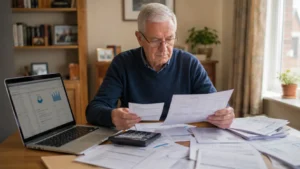
HMRC looks at the income you expect to receive during the tax year before deductions, often described as the gross amount. Self-employment and property income are generally included as net profits rather than total turnover or rent received.
Income To Include
- State Pension income.
- Company, workplace and personal pensions.
- Earnings from employment.
- Interest from savings accounts.
- Dividends from company shares.
- Income received from a trust.
- Taxable state benefits.
- Net self-employment profits.
- Net profits from rental property.
- Your share of income from a joint source.
Your partner’s separate salary or pension is not added to your total. However, if you jointly own savings or property, you should include the share of interest or profit that belongs to you.
Do not compare the threshold only with your take-home pension or the amount reaching your bank. Check pension statements, P60s, savings interest, dividends and property records to obtain a complete annual figure.
How Will HMRC Recover Your Payment Through PAYE?
If you have a live PAYE income source and do not file Self Assessment, HMRC normally changes your tax code so your employer or pension provider deducts more Income Tax.
The winter 2025–26 payment is being recovered through 2026–27 tax codes. The official payment recovery guidance says a typical £200 payment results in approximately £17 of extra tax each month.
Tax-Code Recovery From April 2026
HMRC began issuing updated coding notices for this recovery around April 2026. The payment may appear in the calculation as an “underpayment”, although it is technically a separate charge equal to the payment’s value.
An earlier February 2026 coding notice might not have included the adjustment. A later code issued in early April could therefore replace it, so the newest notice is the important one to review.
Why Might You Receive a K Tax Code?
A K code can arise when deductions included in your code exceed your available tax-free allowance. It does not automatically prove that HMRC has made an error, and the Winter Fuel Payment may be only one part of the calculation.
Official Tax-Code Examples
| Example | Income And Calculation | Result |
| Basic-rate taxpayer | Total income £37,710: £25,737 private pension and £11,973 State Pension. HMRC adds a £1,000 coding adjustment because 20% produces the £200 charge. | Total deductions of £12,973 exceed the £12,570 Personal Allowance by £403, producing code K39 and about £17 extra tax monthly |
| Higher-rate taxpayer | Total income £65,300: £53,327 private pension and £11,973 State Pension. HMRC adds £500 because 40% produces the £200 charge. | Total deductions are £12,473, leaving £97 of allowances and producing code 9L |
Scottish taxpayers may see different coding adjustments because devolved Income Tax rates apply, although the charge still equals the payment received.
How Do You Repay Through Self Assessment or Making Tax Digital?

If you already file Self Assessment, HMRC normally collects the payment through your return rather than changing your tax code. You do not have to register for Self Assessment solely because of this charge.
Self Assessment Actions
- Check your online 2025–26 return for a “Winter Fuel Payment charge” or “Pension Age Winter Heating Payment charge”.
- Add the payment yourself if the pre-populated amount is missing or incorrect.
- Include the amount manually when filing a paper return.
- Submit a paper return by 31 October 2026.
- Submit an online return and pay the resulting bill by 31 January 2027.
For Making Tax Digital for Income Tax, compatible software currently cannot collect the payment when you submit the return. After submission, HMRC will write to confirm how much you owe, how to pay and the deadline for using its online payment services.
You should wait for that communication rather than creating an unsupported payment through your accounting software.
Can You Repay the Winter Fuel Payment Early or in One Lump Sum?
You normally cannot return the payment early simply because you expect your income to exceed £35,000.
PAYE taxpayers must usually wait for HMRC to collect the charge through their tax code. Self Assessment taxpayers must include it in their return, while Making Tax Digital users should wait for written payment instructions.
Returning money directly to the department that issued the benefit may not cancel the separate tax charge. The official instruction is clear: “You’ll need to wait for us to take back the payment, you cannot pay it sooner as a lump sum.”
For future winters, opting out before the deadline is the available way to avoid receiving a payment that would later be recovered.
What Should You Do If HMRC Recovers the Wrong Amount?

HMRC may initially base a PAYE adjustment on estimated income. Once final information for 2025–26 is available, it should reconsider whether your income actually exceeded £35,000.
Steps For Checking A Recovery
- Read your newest tax-code notice and identify the payment adjustment.
- Confirm that it relates to the correct payment and tax year.
- Compare HMRC’s estimated pension and employment income with your records.
- Add taxable savings, dividends, trust income and your share of joint income.
- Check whether you received a benefit that exempts you from the charge.
- Contact HMRC if the payment, income estimate or exemption status is wrong.
If confirmed income shows that repayment was not due, HMRC says it will remove the adjustment and ask your pension provider or employer to refund excess tax through your pension or wages. If the full charge cannot be collected through PAYE, HMRC may issue a separate tax calculation.
Keeping your coding notices and supporting income documents will make any correction easier to explain.
What Happens to Later Payments, and Can You Opt Out?
The recovery timetable changes after the initial 2025–26 payment, so you may see different monthly deductions in future tax years.
Recovery Schedule for Later Winters
If you receive £200 in both 2026–27 and 2027–28, HMRC intends to collect both payments through your 2027–28 tax code. That could mean approximately £33 of additional tax each month during that transitional year. From 2028–29 onwards, recovery is intended to happen through the tax code for the same tax year in which you receive the payment.
For winter 2026–27, people born on or before 27 June 1960 may qualify for between £100 and £300. Eligible recipients should normally receive a letter in October or November and payment in November or December 2026.
When Must You Opt Out in 2026?
The official 2026 opt-out instructions set these deadlines:
- Before 6pm on 18 September 2026 when opting out by telephone.
- Before 11:59pm on 20 September 2026 when using an online service or form.
You need your National Insurance number. Opting out does not affect your State Pension.
Opting Back In And Future Payments
You do not have to opt out every year. Once you opt out, future payments stop unless you opt back in; to receive the winter 2026–27 payment, you must opt back in by 31 March 2027.
Scotland operates Pension Age Winter Heating Payment rather than Winter Fuel Payment, and residents must follow the separate Scottish process. HMRC nevertheless handles the tax recovery across the UK.
How Can You Avoid Scams and Take the Right Next Steps?
Scammers may exploit confusion about tax codes, repayments and opt-out deadlines. HMRC recorded more than 25,000 Winter Fuel Payment scam referrals during the 12 months before its April 2026 warning.
Myrtle Lloyd, HMRC’s Chief Customer Officer, warned: “Criminals are great pretenders and often use fake letters, emails, calls and texts to impersonate HMRC and trick people into giving them money.”
Safe Next Steps
- Check a recovery through your personal tax account or genuine coding notice.
- Do not give bank details, passwords or security codes to an unexpected caller.
- Do not pay through a link in an unsolicited text or email.
- Remember that HMRC will not text or email asking you to repay the payment.
- Forward suspicious tax-related texts to 60599 and then delete them.
- Check whether other heating support may be available.
Other help can include a £150 Warm Home Discount, local council support or Cold Weather Payments when eligible benefits and qualifying temperatures apply. Cold Weather Payments are triggered when the temperature is recorded or forecast at 0°C or below for seven consecutive days.
Using official services directly is safer than following links included in unexpected correspondence.
Conclusion
When HMRC recover Winter Fuel Payments, you should check your individual income, the relevant tax year and whether collection is through PAYE or Self Assessment. Do not assume your partner’s income determines your position, and do not ignore an altered tax code.
Correct inaccurate estimates promptly, verify any benefit exemption and use the official opt-out process if you do not want a future payment recovered.
Frequently Asked Questions
Is the Winter Fuel Payment taxable income?
The payment itself is not treated as taxable income. A separate charge equal to its full value applies to non-exempt recipients whose individual total income exceeds £35,000.
Why Does The Payment Appear As An Underpayment?
HMRC uses an underpayment entry in your coding calculation to collect additional tax through PAYE. The label does not mean you failed to declare the original benefit payment.
What If The Charge Is Missing From Your Online Return?
You should add the relevant Winter Fuel Payment charge yourself before submitting the return. Pre-population is provided where possible, but responsibility for checking the return remains with you.
Does Opting Out Affect Your State Pension?
Opting out of Winter Fuel Payment does not change your State Pension entitlement or amount. It only prevents future Winter Fuel Payments unless you later opt back in.
What Happens If A Recipient Dies During Recovery?
Any outstanding amount is normally dealt with while settling the deceased person’s estate and final tax affairs. The representative handling the estate should check the remaining tax calculation.
Can A Pension Provider Refund Incorrect Deductions?
Yes, after HMRC corrects the tax code, it can ask the pension provider or employer to repay excess tax through pension or employment payments. The provider cannot independently decide that the charge is wrong.
How Is Interest From Joint Savings Counted?
You normally include only the share of joint interest that belongs to you. Your partner includes their own share when calculating their separate individual income.