

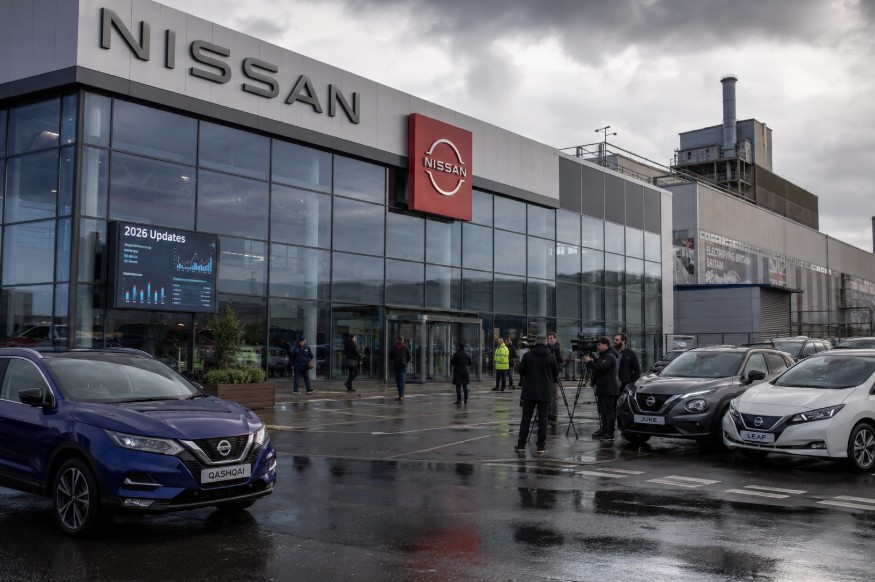
Rumours surrounding Nissan’s future have intensified in 2026 following reports of major job cuts, factory consolidation, and billions in financial losses.
However, Nissan is not going out of business in 2026. Instead, the Japanese carmaker is undergoing one of the largest restructuring programmes in its history under its “Re:Nissan” recovery strategy.
The company is attempting to reduce costs, improve profitability, and stabilise operations after years of declining margins and increasing global competition.
Key highlights:
- Nissan cutting 20,000 jobs globally by 2027
- Around 900 European roles being affected
- Sunderland production lines being consolidated
- Seven factory closures or sales planned globally
- Reduction of Nissan’s vehicle lineup from 56 to 45 models
While the situation remains serious, Nissan continues manufacturing, selling vehicles, and investing in future technologies across the UK and international markets.
Is Nissan Going Out of Business in 2026?
Nissan Motor Co. is not shutting down or filing for bankruptcy in 2026. The company remains fully operational and continues manufacturing and selling vehicles globally. Concerns have mainly come from Nissan’s major restructuring programme and recent financial losses.
To reduce costs and improve profitability, Nissan has been cutting jobs, reducing production capacity, and consolidating some operations. However, these measures are intended to strengthen the business rather than close it down.
The company continues to face pressure from rising costs, slowing global demand, and growing competition in the electric vehicle market. Despite these challenges, Nissan still maintains a strong global presence and dealership network.
For UK consumers, the Nissan Sunderland Plant remains operational and continues to play an important role in European vehicle production.
Why Is Nissan Facing Financial Problems in 2026?

Nissan’s current financial challenges are the result of several years of declining profitability, overstretched sales projections, and growing competition from both traditional and emerging automotive brands.
The company reported substantial annual losses, with falling sales performance across several key regions including Europe, China, and North America. Rising development costs for electric vehicles and changing consumer demand have also placed additional pressure on the business.
One of the biggest issues has been excess production capacity. Nissan expanded manufacturing output during periods of stronger demand but later struggled to maintain those sales volumes as competition intensified.
Financial Pressure Overview:
| Financial Factor | Impact on Nissan |
| Declining global sales | Lower revenue generation |
| Rising EV competition | Reduced market share |
| Excess manufacturing capacity | Increased operational costs |
| Falling European sales | Pressure on profitability |
| Inventory oversupply | Weak cash flow performance |
Former Nissan leadership acknowledged that previous growth expectations were unrealistic. Former CEO Makoto Uchida publicly admitted:
“We cannot deny the fact that our sales plan was overstretched.”
This statement reflected internal recognition that Nissan’s previous business model was no longer sustainable under current market conditions. Despite these issues, the company continues to pursue recovery rather than liquidation.
What Is Nissan’s Re:Nissan Recovery Plan?
Nissan introduced the Re:Nissan recovery strategy to stabilise finances and improve long-term operational efficiency. The programme focuses heavily on reducing costs, simplifying production, and concentrating investment on profitable vehicle categories.
Global Cost Reduction Strategy
The company has announced large-scale cost-saving measures across multiple regions. Nissan aims to reduce fixed expenses by streamlining departments, restructuring administration, and improving manufacturing efficiency.
Key areas targeted include:
- Workforce reductions across international operations
- Lower manufacturing expenses
- Simplified regional distribution systems
- Reduced spending on low-performing vehicle segments
These decisions are designed to help Nissan return to profitability by improving operating margins over the next several financial years. Although controversial, management believes the measures are necessary to protect the company’s future.
Production Consolidation Measures
Nissan is also reducing excess production capacity globally. The company plans to consolidate operations at several facilities and close or sell seven manufacturing sites by 2028.
This includes consolidating two production lines into one at the Sunderland plant in the UK. Nissan has stated that no production jobs will be lost at the site through this change.
Industry analysts believe the move allows Nissan to improve efficiency while potentially opening unused factory space for manufacturing partnerships with other automotive companies.
Long-Term Profitability Goals
The long-term objective of Re:Nissan is to create a leaner and more financially stable company capable of competing in the evolving automotive market.
CEO Ivan Espinosa explained:
“Through the collective efforts of employees company-wide, we are delivering steady progress under Re:Nissan.”
The company also plans to focus more heavily on hybrid vehicles, SUVs, and higher-margin products while reducing investment in weaker-performing segments. Nissan hopes these changes will improve profitability by the 2026 financial year and beyond.
How Many Jobs Is Nissan Cutting Across Europe?

Nissan confirmed plans to cut approximately 900 jobs across Europe, representing around 10 percent of its regional workforce. Most of these reductions are expected to affect office-based and warehouse positions rather than manufacturing roles.
The cuts form part of Nissan’s wider global plan to reduce its workforce by 20,000 jobs by 2027. The company says the reductions are intended to align staffing levels with lower production demand and streamline operations.
European Workforce Changes:
| Region | Planned Changes |
| United Kingdom | Limited office role reductions |
| Spain | Warehouse restructuring |
| France | Administrative restructuring |
| Nordic Markets | Distribution model changes |
The restructuring has generated concern among unions and employees, particularly in Spain and parts of Europe where Nissan previously closed major manufacturing facilities.
Despite criticism, Nissan insists the job reductions are necessary to preserve long-term competitiveness. The company stated that the restructuring aims to create:
“A leaner, more resilient business that adapts quickly to market changes.”
Although painful for employees, Nissan argues these actions are intended to avoid deeper financial instability in the future.
What Is Happening at Nissan’s Sunderland Plant?
The Sunderland plant remains one of Nissan’s most important European facilities and continues operating in 2026. However, changes are being implemented as part of the broader restructuring strategy.
Nissan has confirmed that production will move from two manufacturing lines to one. This decision is designed to reduce operating costs and improve factory utilisation.
Importantly, the company stated there will be no production job losses linked directly to the line consolidation.
The Sunderland site continues producing major models including:
- Nissan Qashqai
- Nissan Juke
- Nissan Leaf EV
The facility remains strategically important because of its role in Nissan’s electric vehicle plans for the UK and Europe.
Sunderland Production Snapshot:
| Sunderland Details | Status |
| Plant closure planned | No |
| Production line consolidation | Yes |
| Production job losses | No confirmed losses |
| EV manufacturing continuing | Yes |
| Future investment expected | Ongoing |
Reports also suggest Nissan has discussed potential manufacturing partnerships with companies such as Chery to maximise unused factory capacity.
While no agreement has been officially confirmed, such partnerships could strengthen Sunderland’s long-term future.
The plant currently operates below maximum capacity, making consolidation a financially practical decision rather than a signal of closure.
Why Is Nissan Reducing Its Global Production Capacity?
Nissan Motor Co. is reducing production capacity because global demand no longer supports its previous manufacturing levels. During earlier expansion periods, the company invested heavily in increasing output across multiple regions.
However, slowing vehicle sales and changing market conditions later exposed operational inefficiencies and rising costs.
The company now plans to reduce global production capacity by around 20%, including consolidating factories and simplifying manufacturing operations.
Key reasons behind the decision include:
- Lowering fixed operating costs
- Improving profitability and cash flow
- Preventing oversupply of vehicles
- Focusing on higher-profit vehicle models
The restructuring strategy is designed to make Nissan more financially stable while helping the company remain competitive in the changing global automotive market.
How Is Competition from Chinese Car Brands Affecting Nissan?

Chinese automotive brands have become one of Nissan’s biggest competitive threats in Europe and the UK. Companies such as BYD, Chery, Omoda, and Jaecoo have rapidly expanded their market presence through competitively priced electric and hybrid vehicles.
Falling Market Share in the UK
Nissan’s UK market share has declined as newer brands gained momentum. Reports showed Nissan’s UK sales dropped significantly during the first months of 2026, while Chinese manufacturers continued increasing market penetration.
Consumers are increasingly attracted to lower-cost EVs and technology-focused vehicles, areas where Chinese companies have grown aggressively.
Pressure From EV Manufacturers
Electric vehicle competition has intensified across Europe. Nissan was once viewed as an early EV leader through the Nissan Leaf, but newer manufacturers now offer broader product ranges and more competitive pricing structures.
Brands such as BYD have expanded rapidly due to strong battery technology, aggressive pricing, and fast production scaling.
Challenges in European Markets
In addition to EV pressure, Nissan faces broader challenges including:
- Rising production costs
- Inflation-related consumer spending reductions
- Supply chain disruptions
- Regulatory changes affecting emissions standards
These pressures have significantly reduced profit margins across Europe and contributed to Nissan’s restructuring decisions.
Even so, Nissan remains active in developing future hybrid and electric models as part of its long-term recovery strategy.
Is Nissan Still Investing in Electric Vehicles and Hybrid Cars?
Despite cost-cutting measures, Nissan continues investing in electric and hybrid technology. The company understands that long-term survival depends heavily on remaining competitive in the evolving automotive market.
The Sunderland plant remains central to Nissan’s EV manufacturing ambitions. Upcoming electric versions of key models, including the Juke, are expected to support future growth.
Nissan is also prioritising hybrid technology and higher-margin SUVs as part of its revised product strategy. At the same time, some less profitable vehicle projects have reportedly been paused or cancelled to reduce unnecessary spending.
The company hopes this more focused approach will allow it to compete more effectively against newer EV rivals while maintaining stronger financial discipline.
Could Nissan Recover Financially by 2026 and Beyond?
Recovery remains possible, although the process will likely take several years. Nissan’s leadership believes the company can stabilise finances through restructuring, improved efficiency, and a more focused product strategy.
The success of the recovery plan will depend on several factors:
- Whether global sales improve
- The effectiveness of cost reductions
- Consumer demand for future Nissan models
- Competition within the EV market
- Potential strategic partnerships
Recovery Priorities:
| Recovery Goal | Purpose |
| Reduce operating costs | Improve profitability |
| Consolidate production | Eliminate inefficiencies |
| Expand EV and hybrid lineup | Remain competitive |
| Improve plant utilisation | Increase productivity |
| Strengthen global partnerships | Reduce long-term risk |
CEO Ivan Espinosa recently stated:
“We are maintaining operational focus and recognising the ongoing momentum of our product lineup.”
This reflects Nissan’s position that the company remains commercially active despite its financial pressures.
Although risks remain significant, analysts generally believe Nissan is more likely to recover through restructuring than disappear entirely.
Should UK Drivers Be Concerned About Buying a Nissan in 2026?
For most UK consumers, there is currently no immediate reason to avoid buying a Nissan vehicle. Dealerships continue operating normally, warranties remain valid, and aftersales support remains fully active across Britain.
The company’s restructuring efforts focus primarily on internal financial operations rather than customer-facing services.
Buyers may even benefit from competitive pricing and promotional offers as Nissan attempts to maintain sales volumes during the recovery period. However, some consumers may remain cautious due to uncertainty surrounding the company’s long-term financial performance.
Resale values could also fluctuate depending on public perception and future restructuring outcomes. Nevertheless, there is no indication that Nissan plans to exit the UK market or discontinue customer support services.
What Does Nissan’s Future Look Like After the Restructuring?
The future of Nissan Motor Co. will depend on how effectively the company delivers its recovery strategy over the next few years. The automotive industry is changing rapidly, especially in electric vehicles, software technology, and autonomous driving systems.
If Nissan successfully reduces costs and improves profitability, it could become a leaner and more competitive manufacturer by the late 2020s.
The company still benefits from strong global brand recognition, manufacturing infrastructure, and an established dealership network.
However, competition from Chinese EV manufacturers and changing consumer demand will continue to create pressure. Industry analysts also believe future partnerships with technology companies or other car manufacturers could influence Nissan’s long-term growth strategy.
While uncertainty remains, Nissan’s current direction suggests restructuring and adaptation rather than collapse.
Conclusion
Nissan Motor Co. is not going out of business in 2026, but the company is facing major financial and operational challenges.
Through its Re:Nissan recovery programme, Nissan is cutting costs, reducing production, and restructuring operations to improve long-term profitability.
Despite these difficulties, the company continues manufacturing vehicles, investing in electric technology, and operating across the UK and global markets.
For UK consumers, the Sunderland plant and dealerships remain operational. Current signs suggest Nissan is focused on recovery and rebuilding rather than shutting down.
Frequently Asked Questions
Is Nissan closing dealerships in the UK?
No, Nissan dealerships across the UK continue operating normally with full sales and servicing support.
Will Nissan continue manufacturing cars in Britain?
Yes, Nissan continues manufacturing vehicles at its Sunderland plant, which remains operational.
Has Nissan announced bankruptcy plans?
No, Nissan has not filed for bankruptcy or announced plans to cease operations.
Why did Nissan reduce its vehicle line-up?
The company is focusing on higher-margin and more profitable models to improve financial performance.
Is Nissan affected by the slowdown in EV demand?
Yes, changing EV demand and increased competition have affected Nissan’s market position.
Could another automotive company partner with Nissan?
Industry speculation suggests partnerships remain possible, particularly in EV technology and manufacturing.
Are Nissan servicing and warranty support still available?
Yes, existing warranties, servicing, and aftersales support remain fully active across the UK.