

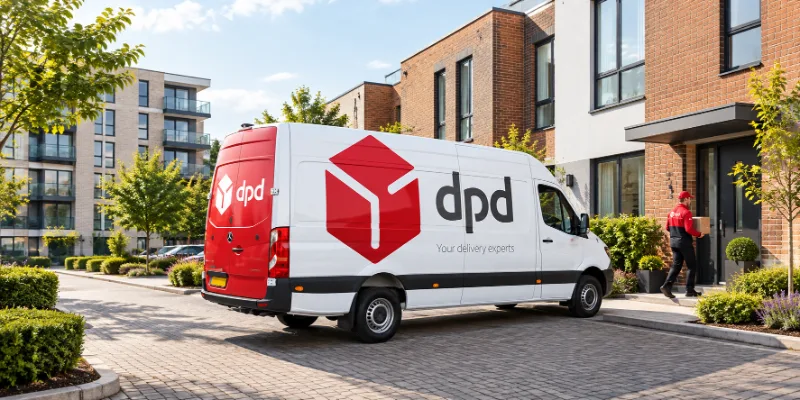
DPD operates a nationwide parcel network covering homes, businesses, Pickup locations and selected Post Office branches. Many UK services include tracking, while eligible deliveries can receive a one-hour Predict window.
Key points include:
- Next-Day Delivery – Available for many UK destinations
- Two-Day Delivery – Available as a slower alternative on eligible services
- Timed Delivery – Includes services targeting delivery by 10:30am or noon
- Weekend Delivery – Saturday and Sunday services are available for qualifying parcels
- DPD Pickup – Parcels can be dropped off, collected or redirected to participating locations
- Tracking – Real-time tracking is available on many services
- International Delivery – European and worldwide delivery services are available
DPD Online currently advertises UK parcel services from £2.99 including VAT, more than 11,000 shops for drop-off and real-time tracking on parcels booked through the service.
Last Updated: 11.09.2026
What DPD Delivery Services Are Available?
The correct service depends on delivery speed, destination, parcel type and the booking channel being used.
| Service | Typical Purpose | Delivery Target |
| DPD Two Day | Less urgent UK parcels | Around two working days |
| DPD Next Day | Standard express delivery | Next working day |
| DPD 10:30 | Time-sensitive parcels | By 10:30am |
| DPD 12 | Business and urgent deliveries | By noon |
| Saturday Delivery | Weekend deliveries | Saturday |
| Sunday Delivery | Eligible weekend parcels | Sunday |
| DPD Pickup | Flexible collection or delivery | Pickup location |
| International | Overseas parcels | Depends on service and destination |
DPD’s current service documentation continues to list Two Day, Next Day, DPD 12, DPD 10:30, Saturday and Sunday options.
DPD Next Day And Two Day
DPD Next Day is designed for parcels that need to reach the recipient quickly. However, next day normally means the next eligible working day rather than necessarily the next calendar day.
DPD Two Day provides another option where delivery is less urgent. It may suit businesses that want tracked delivery without paying for the fastest service available.
Timed And Weekend Delivery
Timed services can provide delivery before 10:30am or noon where available. These are particularly useful for business documents, replacement parts and other time-sensitive consignments.
Saturday and Sunday services are also available, but weekend delivery normally needs to be included in the service selected by the sender.
A parcel arriving at a depot during the weekend does not automatically mean it will be delivered that day.
DPD Vs DPD Local Vs DPD Online
The names can be confusing because customers may encounter DPD, DPD Local and DPD Online during different parts of the parcel journey.
DPD operates the wider parcel delivery network and provides domestic, business and international services.
DPD Local has historically been associated with locally focused collection and delivery services.
Current DPD documentation still identifies separate DPD Local service codes for products including Next Day, Two Day and weekend delivery.
DPD Online is the online booking platform aimed at customers who want to obtain a quote and arrange collection or drop-off without necessarily holding a traditional business shipping account.
The actual delivery experience can therefore vary according to how the parcel was booked and which service the sender selected.
How Long Does DPD Delivery Take?
Many mainland UK parcels can be delivered on the next working day, although there is no single delivery time covering every DPD shipment.
Remote destinations usually take longer.
DPD services available through the Post Office currently indicate:
- UK Mainland – Next-day and two-day services are available
- Northern Ireland – Some services take around two to five working days
- Scottish Highlands And Islands – Some services take around two to five working days
- Isle Of Man – Extended delivery times may apply
- International Destinations – Delivery time varies significantly by country and service
The current range of DPD services available through the Post Office includes DPD Gold, Next Day, Next Day by 12pm, DPD 2 Day and services for remote UK destinations.
Delivery can also be delayed by:
- Severe Weather
- Road Closures
- High Parcel Volumes
- Incorrect Address Details
- Depot Processing Delays
- Bank Holidays
- Customs Checks
- Late Dispatch By The Sender
DPD Parcel Size, Weight And Delivery Costs
Parcel limits depend on the service and booking channel.
DPD Online currently allows UK collection bookings for parcels weighing up to 30kg. Collection prices start from £5.81 including VAT, with final pricing depending on factors such as parcel size and weight.
DPD Online also advertises some UK drop-off and delivery services from £2.99 including VAT.
Common factors affecting the final price include:
- Parcel Weight
- Parcel Dimensions
- Destination
- Delivery Speed
- Collection Or Drop-Off
- Weekend Delivery
- Timed Delivery
- International Destination
- Additional Parcel Cover
UK And International Parcel Limits
Do not assume every DPD service accepts the same parcel dimensions.
For example, Post Office DPD services currently accept parcels weighing up to 30kg, while specific in-branch products have their own dimensional limits.
International limits may also vary between DPD Classic, Air Classic and Air Express.
Volumetric Weight
International air delivery may take parcel dimensions into account as well as actual weight.
This matters when sending a large but lightweight box because the amount of aircraft space occupied can affect the shipping charge.
DPD’s Air Classic service specifically provides options relating to dimensional and deadweight billing.
Businesses sending products internationally should therefore measure parcels accurately before calculating delivery costs.
How To Send A Parcel With DPD?
The exact process depends on the booking service, but a typical parcel journey starts with the following steps:
- Measure And Weigh The Parcel
- Enter The Collection And Delivery Addresses
- Choose The Required Delivery Service
- Select Collection Or Drop-Off
- Declare The Parcel Value Where Required
- Complete Payment
- Attach The Correct Shipping Label
- Hand The Parcel Over For Collection Or Drop-Off
- Keep The Tracking Reference
Old labels and barcodes should be removed or completely covered so they do not interfere with parcel scanning.
Collection Vs Drop-Off
Collection is useful for larger parcels, businesses and people who cannot easily travel to a drop-off point.
DPD Online currently provides a one-hour collection window notification for eligible collection bookings.
Drop-off can provide greater flexibility because parcels can be taken to participating shops rather than waiting for a driver.
How Does DPD Tracking And Predict Work?
A DPD parcel normally passes through several tracking stages:
- Order Details Received
- Parcel Collected Or Dropped Off
- In Transit
- At Delivery Depot
- Out For Delivery
- Delivery Attempted Or Completed
Predict can provide eligible recipients with a delivery time window and options to manage the final delivery.
Depending on the parcel and sender permissions, recipients may be able to:
- Change The Delivery Date
- Select A Safe Place
- Nominate A Neighbour
- Divert To A Pickup Location
International DPD Classic deliveries can also offer Predict and live-tracking functionality in supported European countries, including a shorter countdown as delivery approaches.
Tracking does not necessarily update continuously. A parcel can move between hubs without a new customer-facing scan appearing immediately.
Does DPD Deliver On Weekends And Bank Holidays?
Yes, DPD offers Saturday and Sunday delivery services for eligible parcels.
Weekend delivery depends on:
- Service Purchased
- Destination Postcode
- Sender Arrangements
- Collection Day
- Local Depot Operations
- Network Conditions
A normal weekday service should not automatically be assumed to include Saturday or Sunday delivery.
Bank holidays can also affect collection, depot processing and delivery schedules.
Businesses should account for holiday closures before promising a customer next-day delivery.
Can You Change Or Rearrange A DPD Delivery?
Eligible DPD deliveries can usually be managed through tracking or Predict.
Available options may include:
- Choosing Another Delivery Date
- Selecting A Safe Place
- Nominating A Neighbour
- Diverting To A Pickup Point
Not every parcel can be redirected. High-value parcels, age-controlled items or deliveries with restrictions imposed by the sender may provide fewer choices.
What Happens If A DPD Delivery Goes Wrong?
Delivery problems can range from a missed attempt to a parcel being marked as delivered when the recipient cannot find it.
If DPD says a parcel has been delivered but it cannot be located:
- Check The Delivery Photograph
- Check Any Nominated Safe Place
- Look Around Entrances And Communal Areas
- Ask Other Household Members
- Check With Immediate Neighbours
- Confirm The Delivery Address
- Review Tracking For A Diversion
- Contact The Retailer If It Was An Online Order
- Save Tracking Screenshots And Delivery Evidence
If a delivery is missed, DPD may offer redelivery, delivery to a neighbour, diversion to Pickup or another available option depending on the sender’s instructions.
For an online purchase, the retailer should normally be the first contact because the retailer arranged the delivery contract.
What Happens If DPD Loses Or Damages A Parcel?
Who needs to raise the issue depends on who booked the shipment.
If a retailer booked the parcel, the customer should normally contact the retailer. If you booked DPD directly, you may need to raise the problem yourself.
Keep:
- Booking Confirmation
- Tracking Details
- Proof Of Item Value
- Photographs Of The Packaging
- Photographs Of Damage
- Drop-Off Or Collection Evidence
- Communication With The Recipient
DPD Online currently states that parcels booked through its service include cover up to £50, with additional cover available up to £1,000 subject to its terms.
How Do DPD Returns Work?
DPD also operates consumer and retailer return services.
Customers may receive return instructions from the retailer or arrange an eligible return directly.
DPD currently says its returns network provides access to more than 14,000 shops and lockers across the UK, with tracking available throughout the return journey.
Before returning an item:
- Follow The Retailer’s Return Instructions
- Package The Item Securely
- Attach The Correct Return Label
- Keep Your Drop-Off Receipt
- Track The Parcel Until It Reaches The Retailer
What Items Can You Not Send With DPD?
DPD applies prohibited-item and compensation restrictions.
Depending on the service, restrictions can apply to goods such as cash, certain jewellery, vouchers, tickets, temperature-controlled products and items requiring special permits or licences.
Some fragile goods may also be carried without normal liability for loss or damage.
Always check the current restrictions before sending expensive, fragile, hazardous or unusual goods.
Does DPD Deliver Internationally?
Yes. DPD provides European and worldwide delivery services.
Its current international range includes:
- DPD Classic – European road delivery
- Air Classic – Worldwide delivery for less time-sensitive shipments
- Air Express – Faster global delivery
- DPD Direct – International ecommerce delivery
- DPD Direct Lite – Ecommerce-focused international service
The official DPD international delivery service range currently lists these products and describes Air Express and Air Classic as reaching more than 200 countries.
International parcels may require:
- Customs Declarations
- Accurate Product Descriptions
- Commodity Information
- Import VAT
- Customs Duty
- Recipient Contact Details
2026 EU Customs Changes
A significant change took effect on 1 July 2026 for low-value goods entering the European Union from outside the EU.
The previous customs duty relief for qualifying consignments worth no more than €150 was removed.
A temporary €3 customs duty now applies per item based on tariff classification in relevant low-value consignments, with the temporary system currently scheduled to operate until 1 July 2028.
For UK ecommerce businesses shipping into the EU, this makes accurate customs descriptions, tariff information and landed-cost calculations increasingly important.
DPD Online Vs A DPD Business Account
DPD Online can suit individuals and lower-volume businesses that want to obtain quotes and book parcels as required.
A business shipping larger volumes may benefit from an account-based arrangement offering more integrated shipping management, negotiated rates and business-specific support.
Before choosing between the two, businesses should consider:
- Average Monthly Parcel Volume
- Domestic Vs International Orders
- Need For Collections
- Returns Volume
- Reporting Requirements
- Customer Tracking Requirements
- Integration With Ecommerce Systems
The cheapest service is not necessarily the best option if unreliable delivery promises lead to refunds, complaints or additional customer-service costs.
What Should Businesses Know About Using DPD?
Delivery is part of the customer’s buying experience, so courier management should be treated as an operational issue rather than simply a shipping cost.
Businesses using DPD should:
- Set Realistic Order Cut-Off Times
- Check Postcode Restrictions Before Promising Timed Delivery
- Use Accurate Weight And Dimension Data
- Provide Correct Customer Contact Information
- Monitor Parcels With Unusual Tracking Delays
- Prepare A Process For Missing Parcels
- Keep Proof Of Dispatch And Item Value
- Make Returns Straightforward
- Allow For Weekend And Bank Holiday Disruption
- Check Customs Requirements Before International Shipping
A shipping label being created does not necessarily mean DPD physically has the parcel. Retailers should avoid telling customers that an order has entered the courier network until the handover has actually taken place.
Recent DPD Updates And Changes In 2026
Several developments are particularly relevant to senders in 2026.
DPD continues to expand flexible out-of-home delivery through Pickup shops and lockers.
DPD Online currently advertises more than 11,000 shops for general drop-off, while its consumer returns operation refers to a broader network of more than 14,000 shops and lockers.
International ecommerce has also changed following the EU’s July 2026 customs reforms, increasing the importance of correct product and customs information.
Tracking, delivery photographs, recipient controls and flexible delivery options are also becoming increasingly central to the parcel experience.
How To Contact DPD Customer Service?
Before contacting DPD or a retailer about a delivery, have the following information ready:
- Parcel Or Consignment Number
- Delivery Postcode
- Sender Or Retailer Name
- Expected Delivery Date
- Latest Tracking Status
- Photographs If The Parcel Is Damaged
- Details Of Previous Delivery Attempts
For retail purchases, contacting the seller can often be more effective because the seller holds the delivery contract with the courier.
How To Spot A Fake DPD Email Or Text?
Parcel-delivery scams often imitate genuine courier notifications.
Warning signs include:
- Unexpected Requests For Payment
- Pressure To Act Immediately
- Requests For Bank Or Card Details
- Suspicious Website Addresses
- Requests To Download An Unknown App
- Unexpected Attachments
- Requests For Passwords Or Security Codes
Instead of opening an unexpected delivery link, access tracking independently through the courier’s official website or app.
The National Cyber Security Centre’s parcel scam advice recommends avoiding suspicious links and forwarding suspected scam texts to 7726 free of charge.
Final Thoughts
DPD delivery in the UK now extends well beyond standard weekday door-to-door parcels. Next Day, Two Day, timed, weekend,
Pickup, collection and international services provide businesses and consumers with several ways to match delivery to their needs.
The most important point is that the exact delivery experience depends on the service purchased.
Delivery speed, parcel limits, weekend availability, compensation and redirection options can all vary.
For recipients, live tracking and Predict normally provide the most useful indication of when a parcel will arrive.
For businesses, accurate parcel data, realistic delivery promises and a clear process for delays and returns can help reduce unnecessary customer complaints.
Frequently Asked Questions
How Long Does DPD Next Day Take?
DPD Next Day normally aims to deliver on the next eligible working day, although postcode restrictions, weekends, holidays and network disruption can affect the delivery date.
What Is DPD Two Day Delivery?
DPD Two Day is a domestic service aimed at delivering eligible parcels in around two working days and can suit shipments that do not require next-day delivery.
Does DPD Deliver On Saturdays And Sundays?
Yes. DPD offers Saturday and Sunday services for eligible shipments, but weekend delivery is not automatically included with every parcel.
What Does At Delivery Depot Mean?
It normally means the parcel has reached the depot serving the delivery area. It still needs to be processed and allocated to a route before delivery.
Can I Collect My DPD Parcel Instead?
Eligible parcels may be redirected to a DPD Pickup location, depending on the sender’s permissions and the current stage of delivery.
Who Is Responsible If A DPD Parcel Goes Missing?
For an online retail purchase, contact the seller first because the seller arranged the delivery. If you booked DPD yourself, you normally need to raise the issue directly.
Can I Rearrange A DPD Delivery?
Eligible deliveries can often be moved to another date, redirected to Pickup, left in an approved safe place or delivered to a nominated neighbour through available delivery-management options.