


A Department for Work and Pensions investigation may be opened when information suggests that a benefit claim could be incorrect and that the claimant may have deliberately provided false information or failed to report a relevant change.
Potential triggers include:
- A report from a member of the public or another organisation
- Inconsistencies between a benefit claim and information held by HMRC or another public body
- Undeclared income, savings, property or household changes
- Evidence found during a routine Universal Credit claim review
- Conflicting documents or explanations
- Data indicating that a claimant may not meet the eligibility conditions for a means-tested benefit.
However, a claim review, information request or bank statement check does not automatically mean that fraud is suspected. Reviews can find that a claimant is receiving the correct amount, has been underpaid or has made a genuine mistake.
GOV.UK defines benefit fraud as deliberately claiming money to which a person is not entitled, such as by knowingly providing false information or intentionally failing to report a change.
What Is a DWP Investigation?

A DWP investigation is a fact-finding process used to determine whether a benefit payment is correct and, in more serious cases, whether a criminal offence may have been committed. It is important to distinguish between three different processes.
Routine Claim Review
A routine review checks whether the claimant is still entitled to the benefit and whether the amount being paid is correct. For Universal Credit, a review agent may request bank statements, housing evidence, earnings information, savings records, childcare documents or evidence relating to caring responsibilities.
The claimant will normally also be asked to attend a telephone appointment. A routine review can conclude that the claimant is receiving the correct amount, has received too much or is entitled to more.
Compliance Check
A compliance check may take place where information needs to be clarified but the matter has not necessarily become a criminal investigation. The DWP may ask for supporting evidence or an explanation of a discrepancy.
A genuine mistake can still result in an overpayment being calculated and recovered, even where there is insufficient evidence of deliberate fraud.
Criminal Fraud Investigation
A criminal investigation is more serious. Fraud Investigation Officers may gather evidence, contact information providers, visit the claimant or invite the claimant to an interview under caution.
An interview under caution is a formal interview that is often recorded and could be used as evidence in criminal proceedings. GOV.UK advises people invited to such an interview to obtain advice from a legal adviser or solicitor.
What Are the Main Triggers for a DWP Investigation?
The DWP does not publish an exhaustive operational checklist showing every risk indicator used by its investigators. Based on official guidance, legislation and published data-sharing arrangements, the following circumstances may lead to further checks.
What Can Lead to Further DWP Checks?
Select a potential trigger to understand why the DWP may request more information and what could happen next.
An Unreported Change in Circumstances
A claim may be examined when a relevant change, such as starting work, receiving additional income, moving home or a partner moving in, has not been reported.
A trigger does not prove benefit fraud. Routine reviews and information checks may identify genuine mistakes, lawful exemptions or cases where a claimant has been underpaid.
1. An Unreported Change in Circumstances
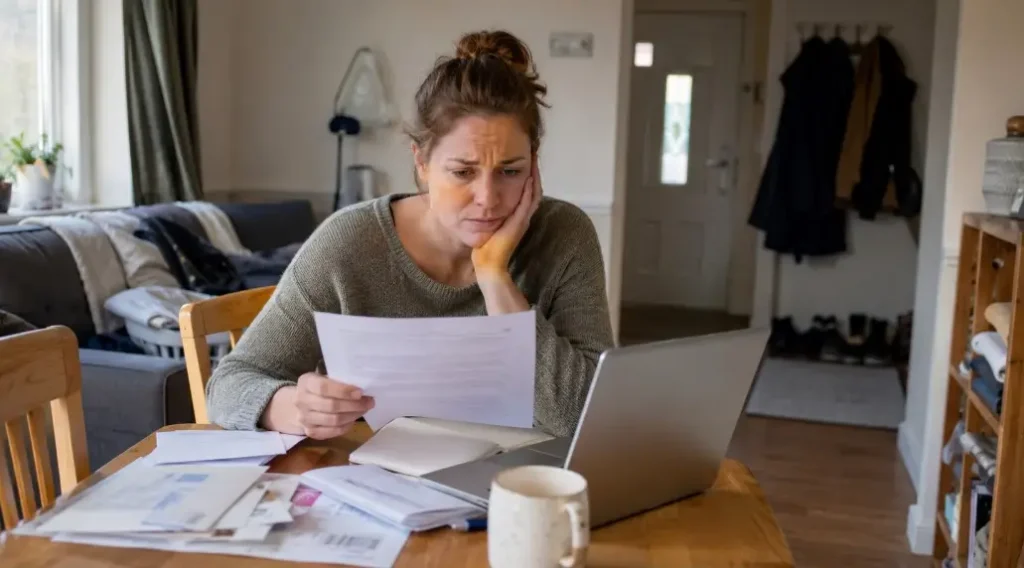
Failing to report a relevant change is one of the clearest reasons why a claim may be examined.
Changes that may affect benefit entitlement include:
- Starting or finishing work
- Working different hours
- Receiving more or less income
- A partner, lodger or other person moving into or out of the home
- Moving house
- Changes to savings, investments, pensions or property
- Starting or ending education
- Going abroad
- Entering hospital or residential care
- Changes affecting health, disability, or caring responsibilities.
Not every change affects every benefit. The relevant rules depend on the payment being claimed. Nevertheless, claimants are responsible for reporting changes through the appropriate service, such as their Universal Credit online account.
A failure to report a change can cause an overpayment. Where the failure is deliberate, it may amount to benefit fraud.
Practical Example
A Universal Credit claimant’s partner moves into the property, but the claimant continues to declare that they are living alone.
The change may affect the household’s entitlement. If records or other evidence later show that the partner was living at the address, the DWP may ask when the arrangement began, whether finances were shared and why the change was not reported.
A shared address alone would not necessarily prove fraud. The department would need to consider the wider facts and applicable benefit rules.
2. Information That Conflicts With HMRC or Other Records
A discrepancy between a benefit declaration and information held elsewhere may lead to a review or investigation. For example, information about employment, earnings, or self-employment may not correspond with what has been reported to the DWP.
An official data-sharing project has previously examined Universal Credit self-employment declarations by matching them with HMRC Construction Industry Scheme information. The stated purpose was to identify possible under-reporting and investigate discrepancies, without making automated fraud decisions.
Other inconsistencies could concern:
- PAYE earnings
- Pension income
- Declared self-employment
- student finance
- Housing costs
- Property ownership
- Capital or savings
- Periods spent outside Great Britain.
A mismatch is an indicator requiring explanation, not automatic proof of wrongdoing. Records can be incomplete, delayed or interpreted incorrectly.
Practical Example
A self-employed claimant declares very low monthly earnings, while tax or contractor information appears to show considerably higher payments.
The DWP may ask for invoices, business bank statements, expense records, tax documents and an explanation of the accounting period. Some payments may represent reimbursed expenses, gross turnover rather than profit, or income received in a different Universal Credit assessment period.
3. A Report From a Member of the Public

Members of the public can report suspected benefit fraud to the Government. Reports may relate to alleged undeclared work, a partner living at an address, hidden savings, property ownership or a person living abroad while receiving benefits.
A report does not establish that fraud has occurred. GOV.UK expressly states that sometimes no action is taken because the person may already have reported the change or the reported circumstances may not affect their benefit.
Investigators will generally need corroborating facts before formal action is taken. An inaccurate, malicious or incomplete allegation should not by itself determine a person’s entitlement.
4. A Routine Universal Credit Review Finds a Discrepancy
A Universal Credit claim can be reviewed at any time. During the review, the claimant may be asked for unedited bank statements and documents relating to income, savings, housing, children, childcare, student finance, self-employment or caring responsibilities.
Information found during a review may prompt further questions where, for example:
- Account balances do not appear consistent with declared capital
- Regular income has not been explained
- Rent evidence differs from the housing costs declared
- Another person appears to be paying household expenses
- business income does not match reported earnings
- Statements for business accounts that were not previously disclosed.
There can be legitimate explanations for all these situations. Transfers between a person’s own accounts, loans, one-off gifts, benefit arrears and certain compensation payments may need to be identified and, explained correctly.
5. Savings or Capital Appear Inconsistent With Benefit Rules
Capital can affect entitlement to means-tested benefits such as Universal Credit and Pension Credit.
Under the current Universal Credit rules, capital above £16,000 will normally prevent entitlement, although exemptions and disregards can apply. The exact treatment depends on who owns the capital, its source and whether a statutory disregard applies.
The Government’s Eligibility Verification Notice code gives an example in which a financial institution could be asked to identify relevant accounts receiving Universal Credit that hold more than £16,000.
However, the code also recognises that some claimants can legitimately hold capital above the usual limit, including where particular compensation payments are disregarded. Further DWP checks are therefore required.
Practical Example
A claimant receives a large compensation payment and their bank balance rises above £16,000.
That balance could be identified during a review or eligibility check. It would not necessarily end entitlement because some compensation payments can be disregarded under benefit legislation. The claimant may need to provide evidence showing the source, date and nature of the payment.
6. Documents or Explanations Do Not Reconcile

An investigation may deepen when documents, dates or explanations appear inconsistent.
Examples could include:
- Different addresses appearing on official records
- Unexplained gaps in bank statements
- Earnings shown on one document but not another
- Altered or incomplete documents
- Inconsistent statements about who lives at an address
- Business records that do not support declared earnings.
During a Universal Credit review, bank statements and other evidence must be provided without changes or edits. Claimants who have difficulty obtaining the required format should contact the review agent through their online journal rather than altering or withholding information.
Can DWP Bank Checks Trigger an Investigation?
Bank information can lead to further checks, but the phrase “DWP bank checks” can be misleading because two different processes may be involved.
Bank Statements Requested Directly From the Claimant
During a Universal Credit review, a claimant may be required to submit unedited bank statements. Review agents can examine payments and transactions to determine whether the information held on the claim is up to date.
Eligibility Verification Notices Sent to Financial Institutions
The Public Authorities (Fraud, Error and Recovery) Act 2025 created a legal framework allowing the DWP to issue Eligibility Verification Notices to banks and other financial institutions.
The user-supplied DWP information-gathering powers factsheet was published while the legislation was still a Bill. It should now be read alongside the enacted Public Authorities (Fraud, Error and Recovery) Act 2025 and the final codes of practice.
Under the eligibility-verification framework:
- Financial institutions apply benefit-related indicators specifieFinancialDWP
- The measure covers Universal Credit, Pension Credit and EmploymeTheand Support Allowance
- The DWP must request only limited information
- The DWP cannot retest transaction information through an Eligibility Verification Notice
- Personal claimant data is not included in the notice sent to the financial institution
- A bank is not asked to decide whether fraud has occurred
- The DWP cannot make a benefit or fraud decision solely from the returned information.
The measure is intended to identify potentially incorrect payments. Human-led checks and consideration of other evidence must follow before a decision affecting an individual is made. Implementation is designed to proceed through a phased “test and learn” process.
Does a DWP Compliance Check Mean Someone Is Being Investigated for Fraud?
A request for bank statements, payslips or information about living arrangements does not automatically mean the DWP suspects deliberate benefit fraud. The department also carries out routine compliance checks to confirm that a claim remains accurate and that the correct amount is being paid.
A compliance check may identify an innocent mistake, an unreported change or a recoverable overpayment. A formal fraud investigation is more likely when the DWP believes someone may have knowingly provided false information or deliberately failed to report a relevant change.
The situation can become more serious if the claimant is visited by a Fraud Investigation Officer or invited to an interview under caution. An interview under caution is normally recorded, and the answers could be used as evidence in criminal proceedings. Anyone receiving such an invitation should consider obtaining advice from a benefits specialist or solicitor before attending.
Does a DWP Claim Review Mean Someone Has Been Reported?

No. A routine review does not mean that another person has reported the claimant or that the DWP suspects a criminal offence.
Universal Credit claims may be reviewed at any time to ensure that the claimant is receiving the correct payment and support.
A review can result in:
- No change
- A higher award
- A lower award
- An overpayment decision
- A finding that the claimant is no longer eligible.
A matter is more likely to move towards a fraud investigation where the evidence suggests that incorrect information was supplied deliberately rather than accidentally.
What Happens During a DWP Investigation?
The process depends on the type and seriousness of the concern.
1. Preliminary Information Is Checked
The DWP may compare the allegation or discrepancy with information already held about the claim. It may conclude that no action is required.
2. Evidence May Be Requested
The claimant may be asked for documents such as:
- Bank statements
- Wage slips
- Tenancy agreements
- Proof of housing costs
- Business records
- Invoices and receipts
- Savings or investment statements
- Evidence showing who lives in the household.
The request should explain how and when the information must be supplied.
3. The Claimant May Be Contacted
Contact may take place through a Universal Credit journal, letter, telephone call or appointment. Fraud Investigation Officers may also visit the claimant.
Official guidance states that a benefit may be stopped during a fraud investigation, with the claimant receiving a letter if this happens.
By comparison, during a standard Universal Credit review, payment will generally only be stopped if the claimant does not provide the requested documents, misses the telephone appointment or is found to be ineligible.
4. An Interview Under Caution May Be Arranged
An interview under caution is a formal part of a possible criminal investigation. It may be recorded and used as evidence.
A person invited to one should not treat it as an ordinary benefit appointment. Obtaining legal advice before answering detailed allegations can be important.
5. DWP Decides What Action to Take
Possible outcomes include:
- No further action
- Correction of the claim
- Recovery of an overpayment
- A civil or administrative penalty
- A reduction or loss of certain benefits
- Referral for criminal prosecution.
A finding that money was overpaid does not necessarily mean that criminal fraud has been proved.
What Should Someone Do After the DWP Contacts Them?
The claimant should first read the letter or Universal Credit journal message carefully and confirm whether it relates to a routine review, compliance interview or fraud investigation. Ignoring the request may delay the case, lead to benefit payments being suspended or result in the DWP making a decision using the information already available.
Before responding, the claimant should collect relevant documents, such as bank statements, wage slips, tenancy agreements, self-employment records and evidence of reported changes. Copies of all correspondence should be retained, alongside a record of telephone calls and documents submitted.
Information should be accurate and consistent, but the claimant should not guess when they cannot remember a date or amount. They can explain that further checking is required and provide supporting evidence afterwards. If the DWP decides that an overpayment has occurred, the claimant should check the dates, calculation and reason given. Depending on the decision, it may be possible to request a mandatory reconsideration or agree an affordable repayment arrangement.
How Should Someone Respond to a DWP Investigation?

A claimant who receives a review or investigation notice should remain calm and deal with it promptly.
Reasonable steps include:
- Check that the contact is genuine: Messages about Universal Credit should normally appear in the claimant’s online journal. Suspicious calls or messages should be verified through an official GOV.UK contact route.
- Read the request carefully: Note the deadline, documents requested, benefit concerned and whether the contact refers to a review, compliance check or interview under caution.
- Provide complete and accurate evidence: Documents should not be edited. Where something is missing, the claimant should explain why and ask how it can be supplied.
- Explain unusual transactions: Evidence may be needed for transfers, loans, gifts, compensation payments, benefit arrears, refunds or money belonging to another person.
- Correct outdated information: Changes should be reported through the correct benefit service. Reporting a change does not guarantee that an earlier overpayment or possible offence will be disregarded, but leaving information uncorrected can make matters worse.
- Seek specialist advice where necessary: Legal advice is particularly important before an interview under caution or where prosecution is being considered.
The claimant should keep copies of documents, journal messages, letters and records of telephone calls.
Can a DWP Decision Be Challenged?
Many DWP benefit decisions can be challenged through mandatory reconsideration.
A claimant can ask for mandatory reconsideration where they believe the DWP has made an error, overlooked evidence or reached the wrong conclusion.
The request will usually need to be made within one month of the date on the decision letter, although a late request may be accepted where there is a good reason.
If the mandatory reconsideration does not resolve the dispute, an appeal may be made to the independent Social Security and Child Support Tribunal, subject to the applicable procedure and time limit.
A complaint about poor service is different from challenging the substance of a benefit decision. An overpayment, entitlement or sanction decision normally needs to be disputed through the formal reconsideration and appeal process.
Final Takeaway
The most common circumstances that may trigger a DWP investigation are unreported changes, inconsistencies between a claim and other records, public allegations, unexplained information found during a routine review and evidence suggesting that benefit eligibility conditions are not being met.
However, an investigation trigger is not proof of fraud. Routine reviews, data matches and bank information can identify genuine mistakes, lawful exemptions or situations where the claimant is actually being underpaid.
The safest approach is to keep claim information up to date, retain supporting records, respond promptly to genuine DWP requests and obtain specialist advice when an interview under caution, penalty, overpayment dispute or prosecution is involved.
Frequently Asked Questions
What usually triggers a DWP investigation?
Common triggers include unreported changes, conflicting income records, undeclared savings, household changes, anonymous reports and discrepancies found during routine claim reviews.
Does a Universal Credit review mean fraud is suspected?
No. Universal Credit claims can be reviewed routinely to confirm that payments are correct, even when there is no suspicion of fraud.
Can the DWP check a claimant’s bank account?
The DWP may request bank statements during a claim review and can obtain limited information from financial institutions under specific legal powers and safeguards.
Can someone be investigated after being reported anonymously?
Yes, an anonymous report may prompt checks, but it is not proof of wrongdoing. The DWP must consider evidence before taking further action.
Will benefits stop during a DWP investigation?
Benefits do not automatically stop in every case. Payments may continue, change or be suspended depending on the evidence and whether the claimant responds to information requests.
How long does a DWP investigation take?
There is no fixed timeframe. Straightforward reviews may be resolved quickly, while complex cases involving several accounts, employers or years of records can take longer.
What should someone do if contacted by the DWP?
They should verify that the contact is genuine, respond before the deadline, provide complete records and seek specialist advice if invited to an interview under caution.
Note: This article has been reviewed against official Department for Work and Pensions, GOV.UK and UK legislation guidance.