

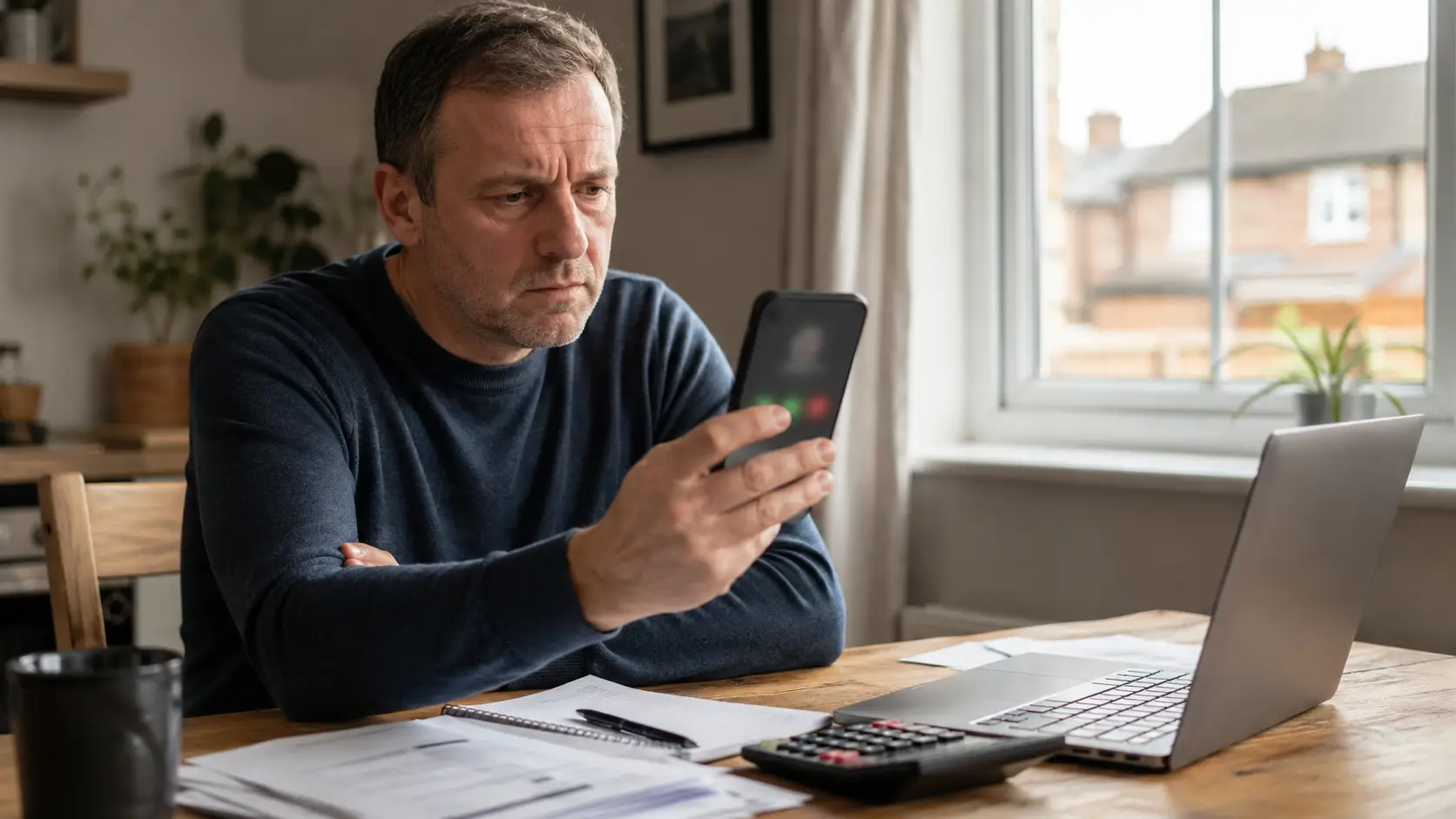
Yes, HMRC can call your mobile phone. However, there is an important difference between HMRC calling you on a mobile and a caller claiming to be HMRC calling from an ordinary UK mobile number such as an 07 number.
HMRC’s published guidance says it may call a mobile or landline and identifies 0300 200 3884 as a number it may use to contact people or leave a voicemail. That does not mean you should automatically trust an unexpected call simply because the caller says they are from HMRC.
If an unfamiliar mobile number calls claiming to be HMRC, the safest approach is to avoid giving information or making a payment until you have independently checked the contact.
Will HMRC Call From an 07 Mobile Number?
You should not assume that an 07 number belongs to HMRC simply because the caller says it does.
HMRC’s general published phone-call guidance identifies 0300 200 3884 for certain outbound contact. It does not establish ordinary UK 07 mobile numbers as a general HMRC outbound number.
There can also be specific HMRC campaigns, research exercises or other authorised contacts with their own arrangements. This is why checking the purpose of the call against current official guidance is more reliable than deciding solely from the number displayed on your phone.
If an 07 number unexpectedly calls you about tax, a refund, a penalty or an outstanding debt, do not treat the mobile number itself as evidence that the call is genuine.
What Does a Genuine HMRC Call Look Like?
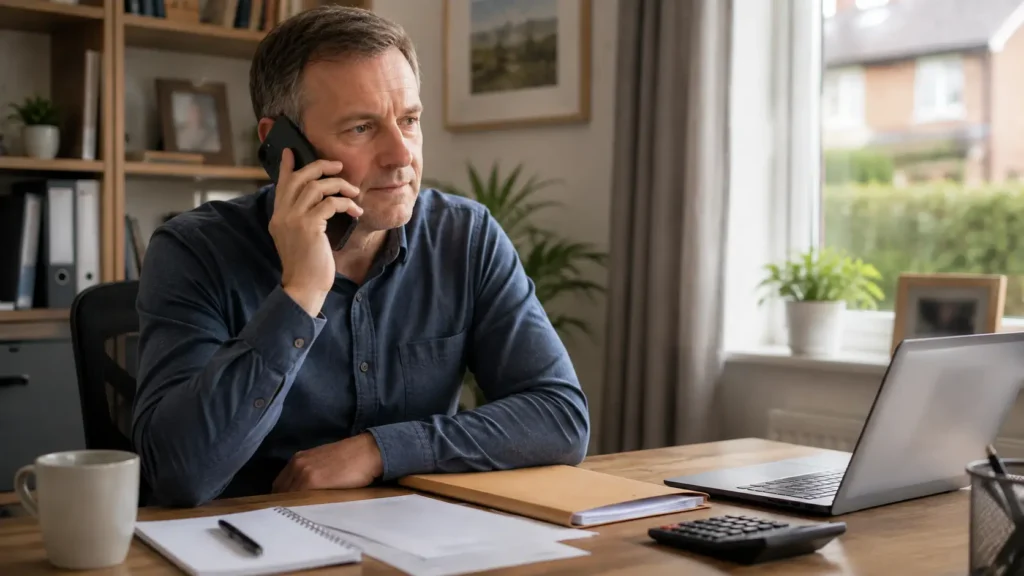
There is no single script used for every genuine HMRC telephone call. The reason for contact can vary depending on your tax affairs and the HMRC team involved.
HMRC may contact customers about matters such as:
- an existing tax issue;
- payment or debt-management information;
- correspondence that requires follow-up;
- a current HMRC campaign;
- research or customer-service activity; or
- another matter connected with your tax affairs.
HMRC’s current guidance also says it sends voice prompts to some customers who are behind with payments. Those messages may explain what the customer should do or provide legitimate HMRC contact information.
However, you should distinguish an informative call from a caller attempting to pressure you into taking immediate financial action.
Can HMRC Ask for Your Bank Details Over the Phone?
The answer depends on the type of contact, so broad claims about every HMRC telephone conversation should be avoided.
For calls covered by HMRC’s published 0300 200 3884 outbound-number guidance, HMRC specifically says it will never ask for personal or financial information during the call.
That means you should be particularly cautious if an unexpected caller apparently using this number starts asking for sensitive information.
Examples include:
- online banking passwords;
- full card details;
- PINs;
- one-time security codes;
- passwords for HMRC or Government Gateway accounts; or
- an immediate transfer of money.
A genuine organisation may have processes for confirming identity when you contact it through an official channel, but you should not confuse that with handing sensitive information to someone who has unexpectedly called you.
What Are the Signs of an HMRC Scam Call?
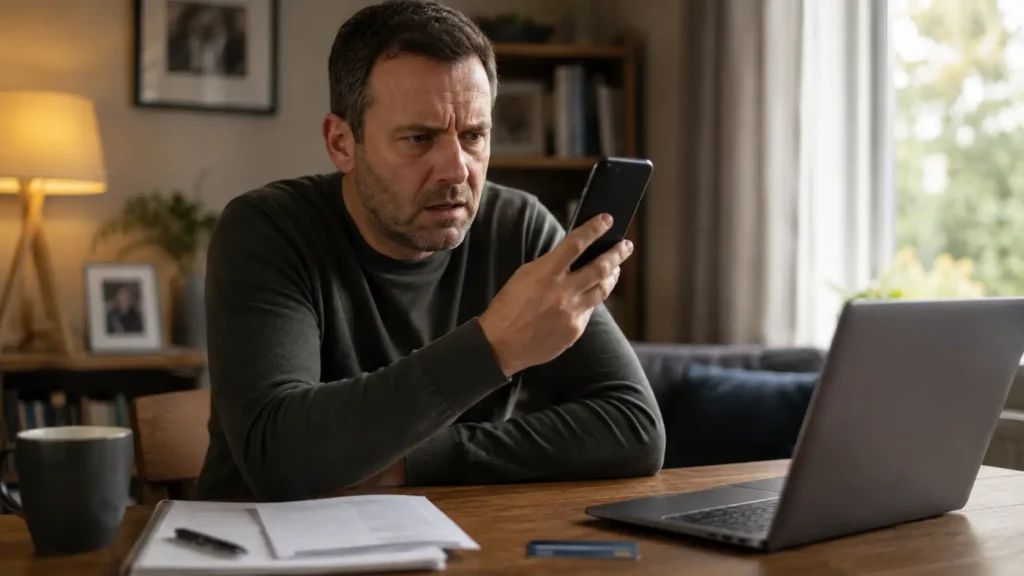
Fraudsters often rely on urgency and fear. The purpose is to make you react before you have time to check whether what you are being told is true.
HMRC’s official tax scam identification guidance says a contact could be a scam if it:
- rushes you;
- threatens you;
- arrives unexpectedly;
- asks for personal information such as bank details;
- tells you to transfer money; or
- offers a tax refund, rebate or grant unexpectedly.
HMRC also says it will never threaten you with arrest or leave a voicemail threatening legal action.
Be especially cautious when a caller says:
- “Pay immediately or you will be arrested.”
- “Police are on their way unless you settle your tax bill.”
- “You have a refund, but we need your card details first.”
- “Transfer the money while I stay on the phone.”
- “Do not hang up or contact HMRC separately.”
- “Give me the security code that has just been sent to your phone.”
Those behaviours should make you stop the conversation and verify the claim independently.
Could This HMRC Call Be a Scam?
Select anything that happened during the call, then check the warning signs.
An unexpected call should not be treated as genuine simply because the caller says they are from HMRC. Use this checklist to identify behaviours that should make you more cautious.
What happened during the call?That does not automatically prove the call is genuine. Caller ID and the number displayed on your phone should not be used as the only method of deciding whether an HMRC call can be trusted.
One or more behaviours you selected should make you cautious. Do not treat the call as genuine until the contact has been independently verified.
Can the Number Shown on Your Phone Be Trusted?
Caller ID should not be your only method of deciding whether an HMRC call is genuine.
A familiar or official-looking number may make a call appear convincing, while an unfamiliar number may make a genuine contact seem suspicious. Neither situation provides enough evidence on its own.
The safest test is therefore not:
“Does this number look like HMRC?”
It is:
“Can I independently verify that this contact matches something HMRC is genuinely doing?”
If you have any doubt, end the call and use an official contact method that you have found independently.
Do not use a telephone number, web address or payment instruction given to you solely by the unexpected caller.
What Should You Do If You Miss an HMRC Call?
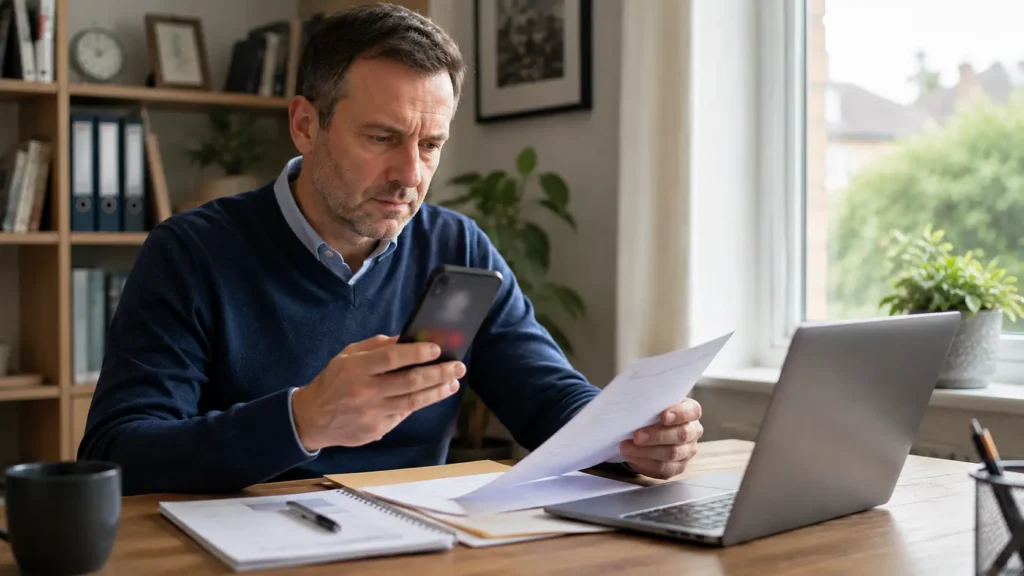
If you miss a call from 0300 200 3884, HMRC says it may leave a voicemail telling you that it will try again.
You do not need to panic or immediately call an unknown number back.
Instead:
- Listen to any voicemail without acting on payment instructions.
- Check whether the number and reason for contact match current HMRC guidance.
- Look at recent HMRC letters, your tax account and other legitimate correspondence for context.
- Use an independently obtained official HMRC contact route if you need clarification.
The published 0300 200 3884 number is not HMRC’s general enquiries line, so simply ringing it as though it were a normal helpline is not the recommended approach.
What If the Caller Says You Are Owed a Tax Refund?
Tax refunds are a common subject for impersonation attempts because the promise of receiving money can encourage people to hand over details quickly.
You should be cautious if an unexpected caller claims you are owed a refund and then asks for banking, card or security information.
HMRC does issue genuine repayment communications. For example, taxpayers can receive legitimate correspondence where an Income Tax calculation shows that too much tax has been paid. You can read more about HMRC refund letters and how repayments may be communicated.
The existence of genuine tax refunds does not make an unexpected refund phone call genuine.
Verify the refund independently through official HMRC services rather than following instructions given by an unsolicited caller.
What If the Caller Says You Owe HMRC Money?
HMRC does contact taxpayers about debts and payment issues, so the fact that someone mentions an unpaid tax bill does not by itself prove that they are a scammer.
Equally, knowing something about your tax circumstances does not prove that the caller is genuine.
Check the underlying liability separately.
This is particularly important where changing tax rules or government payments may create legitimate adjustments to a tax code. For example, there are specific rules covering how HMRC may recover some Winter Fuel Payments through the tax system.
The principle is the same regardless of the type of tax debt: confirm that the amount exists through an official record before paying it.
Never transfer money purely because an unexpected caller tells you that payment must be made immediately.
How Can You Verify an HMRC Call Safely?
If you are unsure whether a caller is genuinely from HMRC:
- Do not give the caller sensitive information.
- Do not make an immediate payment.
- End the call if you feel pressured or uncertain.
- Check HMRC’s published genuine-contact information.
- Review any relevant letter, tax account entry or previous correspondence.
- Contact HMRC independently using details obtained from GOV.UK.
A genuine tax issue will still exist after you have taken time to verify it.
Someone trying to prevent you from checking independently should make you more cautious, not less.
How Do You Report a Suspicious HMRC Phone Call?

If you believe someone has called you while pretending to be HMRC, you can use HMRC’s official service to report a suspicious HMRC phone call.
Do not continue engaging with the caller simply to gather more evidence.
If you have already transferred money or disclosed sensitive financial information, contact your bank immediately. You should also follow the appropriate fraud-reporting route for where you live.
Reporting a scam call is different from reporting another person or business for suspected tax evasion. They are separate processes.
What If You Have Already Given the Caller Personal Details?
Act promptly.
If you disclosed banking or card information, contact your bank using a trusted number. If you shared passwords, change affected passwords and avoid reusing the same password elsewhere.
You should also check your HMRC account for activity you do not recognise and pay attention to unexpected authentication codes, changes to your details or correspondence you did not request.
Do not continue speaking to the original caller in an attempt to “undo” what happened.
Should You Answer an Unknown Number Claiming to Be HMRC?
You do not have to decide whether a call is genuine while you are still on the phone.
If you answer and the caller says they are from HMRC, listen carefully to the reason for contact without immediately disclosing information.
If anything seems inconsistent, threatening or unusually urgent, end the call and verify it independently.
This gives you a simple rule to follow:
Treat an unexpected HMRC call as unverified until you have enough independent information to trust it.
That approach protects you without assuming that every unexpected HMRC call is fraudulent.
FAQs
Does HMRC ever call you on your mobile?
Yes. HMRC’s published guidance says it can call customers on mobile and landline devices.
Does HMRC call from mobile numbers beginning 07?
HMRC’s general published outbound-call guidance identifies 0300 200 3884. It does not establish an ordinary 07 mobile number as proof that a caller is HMRC. If an 07 number claims to be HMRC, verify the call independently.
What number does HMRC call from?
HMRC currently says it may contact you or leave a voicemail from 0300 200 3884. There can also be specific HMRC contacts and campaigns, so the reason for the call should be checked against current official information.
Is 0300 200 3884 definitely safe?
It is a published HMRC outbound number, but you should still pay attention to what the caller asks you to do. The displayed telephone number should not replace independent verification where something seems suspicious.
Will HMRC leave a voicemail?
Yes. HMRC says it may leave a voicemail after a missed call to tell you that it will try to contact you again.
Will HMRC threaten you with arrest?
No. HMRC’s scam guidance expressly says it will never threaten arrest.
Will HMRC leave a voicemail threatening legal action?
No. HMRC identifies a voicemail threatening legal action as a sign of a suspicious phone call.
Should you call an HMRC mobile number back?
Do not call an unfamiliar number back simply because the caller claimed to be HMRC. Obtain the correct contact details independently and use an official channel.
Can a genuine HMRC call be unexpected?
Yes, some genuine HMRC contact may be unexpected. That is why you should assess the purpose and behaviour of the call rather than assuming every unexpected call is fraudulent.
What is the safest thing to do if you are unsure?
End the call without providing sensitive information or making a payment. Then verify the matter independently using official HMRC information.