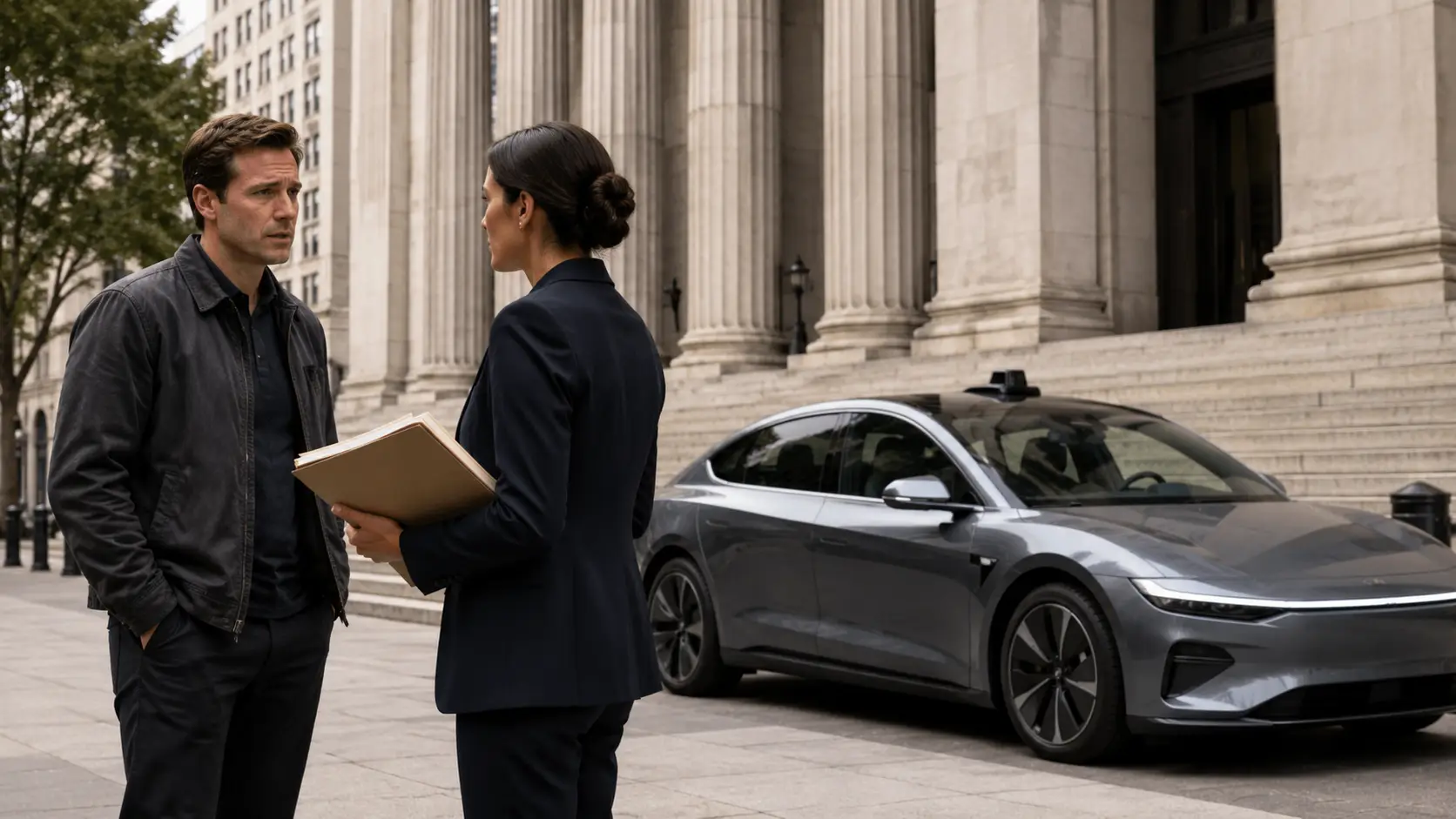
Tesla self-driving safety complaints are at the centre of a US federal lawsuit filed by former testing manager Javier Medrano, who alleges that he was dismissed after warning about understaffing, fatigue and weaknesses in Tesla’s Houston Full Self-Driving testing operation.
His complaint says one manager was left responsible for 38 vehicles and operators working continuously across three shifts.
The claims have not been tested in court, and Tesla had not publicly answered them in the referenced reports. The lawsuit also does not prove that Tesla’s driving software caused a crash or contains a safety defect.
It concerns alleged working conditions, safety management and retaliation, while separate federal investigations examine how FSD performs on public roads.
Key Takeaways:
- Medrano alleges Tesla exceeded an internal 15-to-one staffing baseline.
- He says he worked 60 to 80 hours weekly and remained on call.
- A March 2025 collision became central to the dispute.
- UK Tesla features still require active driver supervision.
Who Is Javier Medrano, and Why Has He Sued Tesla?
Medrano, reported as 32, says he joined Tesla in October 2023 and became the sole operational manager for its Houston FSD testing market roughly eight months later.
Another account describes his direct management of the test fleet as running from October 2024 until 1 May 2025, indicating that his employment and managerial periods should not be treated as identical.
His role allegedly involved supervising critical-intervention operators who sat behind the wheel while test vehicles explored the limits of FSD software.
Those operators were expected to intervene when necessary, while the manager audited footage, organised ride-alongs and handled incidents.
Medrano filed the case himself in the Southern District of Texas on 27 July 2026.
He seeks reinstatement, front and back pay, lost benefits, compensation for an unvested equity award and damages connected to emotional, family and financial harm. He now reportedly works for another electric-vehicle company.
Tesla’s own quarterly material says unsupervised Robotaxi rides began in Houston and Dallas in April 2026, nearly a year after Medrano’s dismissal. That distinction matters because the lawsuit concerns an earlier testing operation rather than the later commercial service.
How Did Tesla’s Houston Self-Driving Testing Operation Allegedly Become Understaffed?
The complaint says the Houston programme expanded faster than its management resources, leaving Medrano responsible for work that comparable operations divided between several leads.
Expansion From 15 to 38 Vehicles and Operators
An internal message in May 2024 allegedly described a target of around one lead for every 15 drivers. The complaint says Tesla later increased Houston’s fleet and operator team to 38 without appointing another manager.
The vehicles reportedly operated during morning, evening and “graveyard” shifts, creating a 24-hour testing cycle. Medrano was also expected to be available during weekends.
Alleged Staffing Comparison
| Measure | Reported Position |
| Original vehicles and operators | 15 |
| Expanded vehicles and operators | 38 |
| Daily shifts | 3 |
| Testing coverage | 24 hours |
| Alleged internal baseline | 1 lead to 15 drivers |
| Reported Houston ratio | 1 manager to 38 operators |
Every figure in the table comes from Medrano’s complaint and remains subject to challenge.
The Alleged 15-to-One Supervisory Standard
Medrano says the 15-to-one figure was an operational baseline rather than an informal aspiration.
The difference is legally and factually important: Tesla could dispute that the ratio was mandatory, that it applied to Houston in the way alleged, or that the relevant roles were directly comparable.
The complaint says other cities had multiple leads and that two team leaders from Dallas were eventually sent to Houston after Medrano was dismissed.
Could One Manager Provide Sufficient Safety Oversight?
The role allegedly required active review of driving clips, weekly ride-alongs, staff performance checks and follow-up after safety incidents. Those duties were performed while vehicles operated on public roads and test drivers remained ready to intervene.
The broader official FSD investigation record shows why timely human intervention remains relevant: federal investigators are assessing whether warnings are sufficiently clear and early for a supervising driver to respond safely.
That investigation does not verify Medrano’s staffing claim, but it confirms that human supervision is part of the safety question surrounding FSD.
What Does the Lawsuit Say About Fatigue and Working Conditions?
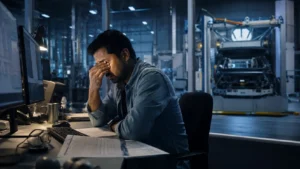
Medrano alleges that understaffing resulted in working weeks averaging 60 to 80 hours, poor sleep, missed meals and weekend on-call duties. He says he repeatedly warned management that his physical and mental condition was deteriorating.
Reported Escalation Timeline
- In February 2025, he allegedly reported a breakdown in safety oversight and extreme exhaustion.
- Management reportedly warned that another 2.5 performance rating out of five could lead to a Performance Improvement Plan.
- He later asked for another team lead and one or two weeks away from work.
- His request described the situation as his “S.O.S signal”.
- He says the requested support did not arrive before the March collision.
In one message quoted in the complaint, Medrano said he was trying not to “lose my absolute mind” because he was not sleeping or eating correctly. That quotation reflects his account of his condition; it does not independently establish Tesla’s working-hour requirements or responsibility for his health.
What Happened After the Reported March 2025 Tesla Test-Vehicle Collision?
The complaint says one vehicle in the Houston testing fleet collided with a member of the public on 30 March 2025. It does not establish in the supplied material that FSD caused the collision, so the incident should not be described as a software-caused crash.
At 2.05am, the test operator allegedly called Medrano under Tesla’s emergency procedure. Medrano says he processed the call while effectively asleep, gave inappropriate guidance and later had no recollection of the conversation.
The operator reportedly remained at the scene for about an hour and was approached by a person described in the complaint as possibly impaired.
Medrano contacted human resources the following day and connected the response failure to exhaustion and inadequate staffing. He says an HR representative suggested using “Do Not Disturb” during active testing periods when he did not wish to receive calls.
That response, if accurately described, will require context. The court may need to determine who was formally on call, what Tesla’s emergency procedures required, whether alternative contacts existed and whether Medrano’s actions breached company policy.
Why Does Medrano Believe His Dismissal Was Retaliatory?
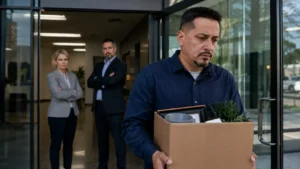
Medrano argues that the timing of his internal complaints, the collision investigation and his dismissal shows that Tesla punished him for raising safety issues. Tesla has not yet presented its account in the early public docket.
The Sequence of Complaints and Dismissal
After the March incident, Medrano says he warned HR about an ongoing public-road oversight hazard and referred to the company’s stated commitment to a safe workplace. He continued requesting management assistance.
In April 2025, a subordinate whom Medrano had supported for promotion was reportedly elevated into his position. Tesla dismissed Medrano on 1 May, with an Autopilot manager allegedly criticising his failure to delegate. Medrano’s response was that he had nobody available to whom the work could be delegated.
The complaint says two Dallas leads were subsequently sent to support his successor. It also alleges that a stock award was withdrawn about one week before it was due to vest.
What Is Medrano Asking the Court to Award?
Medrano seeks reinstatement, lost pay and benefits, compensation for the equity award, emotional-distress damages and other relief. Filing those requests does not mean he will receive them.
A retaliation claim ordinarily depends on the applicable legal protection, whether the employee engaged in protected activity, the employer’s stated reason for acting and evidence connecting the two.
The separate regulatory record provides context, but it cannot establish whether this particular employment decision was unlawful. Tesla’s eventual filing may materially change the available account.
How Are the Lawsuit and NHTSA’s Tesla Investigations Different?
The three matters concern related technology but different questions. Medrano’s suit concerns alleged workplace retaliation and operational oversight; the federal investigations examine possible vehicle-system risks.
Comparison of Current Proceedings
| Matter | Main Focus | Reported Data | Current Meaning |
| Medrano lawsuit | Staffing, fatigue and retaliation | 38-to-one ratio; 60–80-hour weeks | Allegations awaiting Tesla’s response |
| Preliminary evaluation PE25012 | Signals, signs and lane markings | 62 complaints, 4 media reports, 14 crash reports | No defect finding yet |
| Engineering analysis EA26002 | Reduced-visibility detection | 9 crashes, 2 injury incidents, 1 injury and 1 fatality | Investigation remains open |
The traffic-rule investigation includes allegations of vehicles proceeding towards red signals, entering opposing lanes and using marked lanes improperly. Investigators are also examining whether drivers received accurate and sufficiently timely warnings.
The separate reduced-visibility analysis covers an estimated population of 3,203,754 vehicles.
It examines camera performance in conditions including glare, fog and airborne dust; the official resume says nine crashes included two injury incidents and one fatal incident. An open investigation is not a final determination that a defect exists.
Do the Complaints Prove That Tesla Full Self-Driving Is Unsafe?
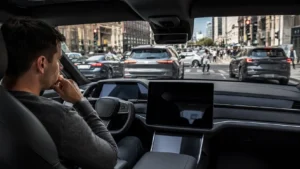
No. Medrano’s lawsuit does not by itself prove that Tesla FSD is unsafe, defective or responsible for the March 2025 collision.
Evidence Still Required
- Tesla’s formal answer and stated reason for the dismissal.
- Records confirming Medrano’s hours, duties and on-call status.
- The internal message allegedly establishing a 15-to-one baseline.
- Collision records identifying the vehicle’s operating mode and cause.
- Evidence showing whether required audits and ride-alongs were missed.
- Final regulatory findings from the two federal investigations.
- Reliable safety comparisons using consistent mileage and crash definitions.
Consumer complaints are useful investigative leads, but they are not automatically verified incidents. Likewise, internal allegations may reveal genuine risks without proving every factual or legal claim made by a plaintiff.
The responsible conclusion is narrower: the lawsuit raises substantial questions about staffing, fatigue and incident response that require evidence from both parties.
What Do the Safety Allegations Mean for Tesla Drivers and Businesses in the UK?
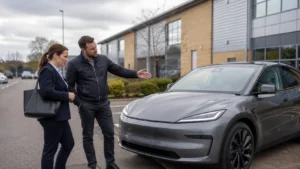
The Houston allegations do not establish that British Tesla owners face the same operational conditions. They are nevertheless relevant to UK debates about driver responsibility, accurate marketing and corporate accountability in automated transport.
Tesla’s Current UK Driver-Assistance Position
The company’s current UK driver guidance describes Autopilot as an advanced driver-assistance system. It requires drivers to remain alert, keep their hands on the wheel and be prepared to take control.
Its official wording is explicit: “The currently enabled features do not make the vehicle autonomous.” FSD (Supervised) is also listed as not yet available in the UK, with future availability dependent on development and regulatory approval.
UK Rules on “Self-Driving” Terminology
New automated vehicle marketing rules reserve expressions including “automated”, “autonomous”, “driverless” and “self-driving” for authorised or listed vehicles.
The term “robotaxi” is not on the protected list, but misleading use may still fall under a broader confusion offence.
Transport minister Simon Lightwood told Parliament: “Misleading marketing of automated vehicles is dangerous.” A criminal conviction for a relevant marketing offence can carry a maximum sentence of two years, a fine, or both.
Human Oversight and Business Accountability
Britain’s proposed safety principles say authorised vehicles should obey traffic law and ultimately achieve safety at least equal to a careful and competent human driver.
The wider framework is expected to regulate authorisation, continuing safety monitoring and responsibility when nobody is driving.
For businesses, the Houston case highlights questions extending beyond software accuracy: whether testing teams are adequately staffed, how fatigue is controlled, who responds after an incident and whether employees can escalate concerns without retaliation.
Those questions may influence public confidence, procurement decisions and regulatory scrutiny, but the UK implications remain contextual until the lawsuit produces tested evidence.
Conclusion
The Tesla self-driving safety complaints described by Medrano concern more than a disputed dismissal. They raise questions about whether the people supervising a continuously operating test fleet had enough time, support and rest to perform safety-critical duties.
The central figures, 38 operators, three shifts, a claimed 15-to-one baseline and 60-to-80-hour weeks come from one side of an unresolved federal case.
Tesla’s response, internal records and evidence about the March 2025 collision will determine how much of that account can be substantiated.
The lawsuit must also remain separate from federal vehicle investigations and Britain’s automated-driving rules.
Together, however, the matters illustrate a common principle: credible self-driving safety depends on software performance, clear driver responsibilities and robust human oversight.
FAQs
When Was Javier Medrano Dismissed by Tesla?
The complaint says Tesla dismissed Medrano on 1 May 2025. He filed his federal lawsuit on 27 July 2026.
Was FSD Operating During the March 2025 Collision?
The supplied accounts do not conclusively establish the vehicle’s precise operating mode. The article should therefore not state that FSD caused the collision.
Has Tesla Responded to Medrano’s Allegations?
Tesla had not provided a public response in the referenced coverage. Its position may become clearer through a court filing or later statement.
How Many Complaints Are Included in the Traffic Investigation?
The official information request identifies 62 consumer complaints. It also lists four media reports and 14 reports submitted under a federal crash-reporting order.
Can UK Tesla Drivers Stop Monitoring the Road?
No, currently enabled UK features require active supervision. Drivers must remain attentive, keep control of the vehicle and be ready to intervene.
Is Full Self-Driving Legally the Same as an Autonomous Vehicle?
No, a product name does not determine a vehicle’s legal automation status. UK authorisation depends on whether it can drive safely without human control or monitoring.
Could the Lawsuit Affect Tesla’s Robotaxi Business?
The case could increase scrutiny of testing governance and employee escalation procedures. Any direct operational effect will depend on evidence, court decisions and regulatory responses.
Note
Medrano’s statements must remain attributed allegations unless independently verified or accepted by a court. The employment lawsuit, federal vehicle investigations and UK automated-vehicle regime are separate matters and do not prove one another.